A Beloved but Unfinished Film
Hook has stayed with people for over thirty years. Many first saw it as children, forgot about it for a while, then came back to it much later. That return can be a strange experience. The images and John Williams’ music are familiar, but they also bring back the time when we first encountered them. The melancholy in the film feels different as adults because our own memories have become attached to it.
Age changes what we notice in the film as well. The pirates, fairies and adventure remain, but absence and emotional distance become easier to see. Peter has lost the points that once connected him to his own life. Hook gives these ideas real weight, but some of them disappear before the film has finished developing them.
To us, Hook is a film that reaches several strong ideas and can’t always stay with them. Some scenes get very close to the human story Spielberg was trying to tell before the film is pulled back toward the adventure. It often feels as though something has been interrupted, and that unfinished quality may be one reason people keep returning to it.
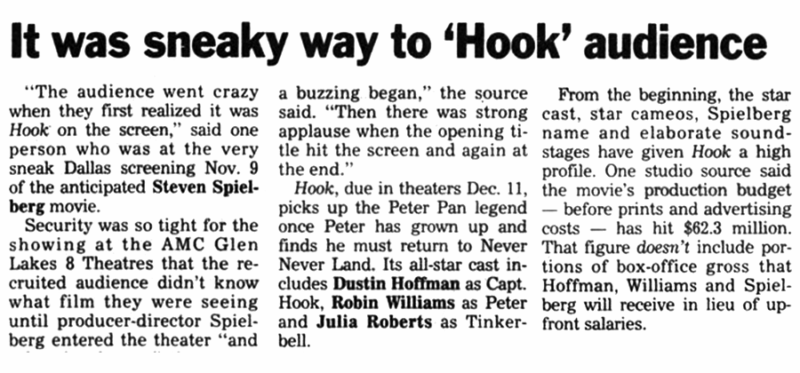
There was a longer version of Hook shortly before release. An extended cut was completed and screened for an audience in Dallas in November 1991. The theatrical version came after substantial editing late in the process, so it was not the only complete form the film had taken. Looking at the deleted material gives us some idea of what that earlier structure contained.
The scenes discussed here went past the script stage: they were filmed. We cannot say what condition those elements are in today, or whether every scene still survives in a form that could be restored. The footage existed, however, and a more complete version of Hook remains possible if the material can be found and the work is undertaken.
“Hook is not a fairy tale. Hook is a movie about the practical reality juxtaposed against a world that is very famous from Peter Pan. But it’s really a story about a man who has to remember who he was, who has forgotten who he once was. It’s a huge Technicolor tale about amnesia, and getting your memory back. And therefore getting your childhood back.”
What is Hook Truly About?
Spielberg’s statement is rarely placed at the centre of discussions about Hook, although it gives us one of the clearest ways into the film. He describes a man who has forgotten who he was. We read Peter’s amnesia as a crisis and also as a defence: forgetting has let him keep a painful past at a distance.
Hook is often reduced to a familiar moral about adulthood: we forget the children we once were and have to recover a balance between maturity and imagination. That interpretation fits part of the film, but it leaves aside what Spielberg and the shooting script explicitly establish. Peter Banning doesn’t remember his childhood at all, and that goes further than the ordinary effect of time or of adult responsibilities. The script describes it as amnesia, and the film treats his return to Neverland as a recovery of what has been lost.
Regression Leads to Redemption
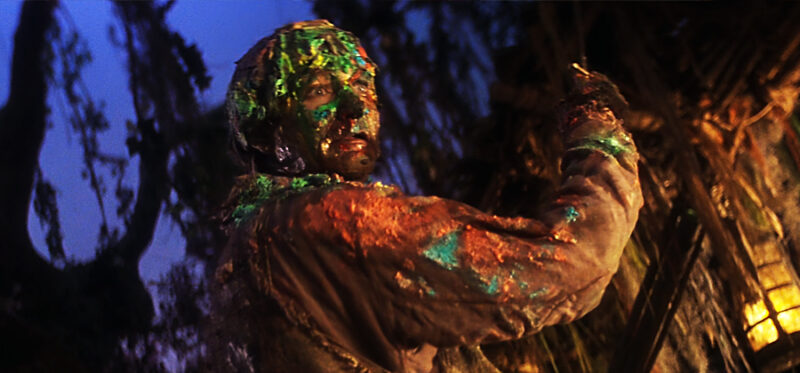
In the original script, regression is what heals Peter. He can only rebuild himself by letting the child he buried come back to the surface. Peter does not choose that regression at first. It appears through anger, reactions larger than the moment seems to justify and brief losses of rational control, all suggesting something unresolved beneath the adult identity he has constructed.
The second act is above all about remembering. Before Peter can defeat Hook, he has to recover what amnesia removed from him. The film never explicitly describes that process in psychological terms, but the idea of repression offers one possible explanation for the way his memories return. What appears to have vanished may instead have been pushed beyond reach.
Hook places this amnesia inside the familiar world of Peter Pan. Neverland is a visibly staged world, theatrical and artificial on purpose. Spielberg introduces that language in the school play, where pulleys and wires remain visible, and the inhabitants of Neverland often behave like children sustaining a shared game. This theatricality comes from Barrie and the Peter Pan stage tradition, and it also lets Neverland be read as an extension of Peter’s inner world.
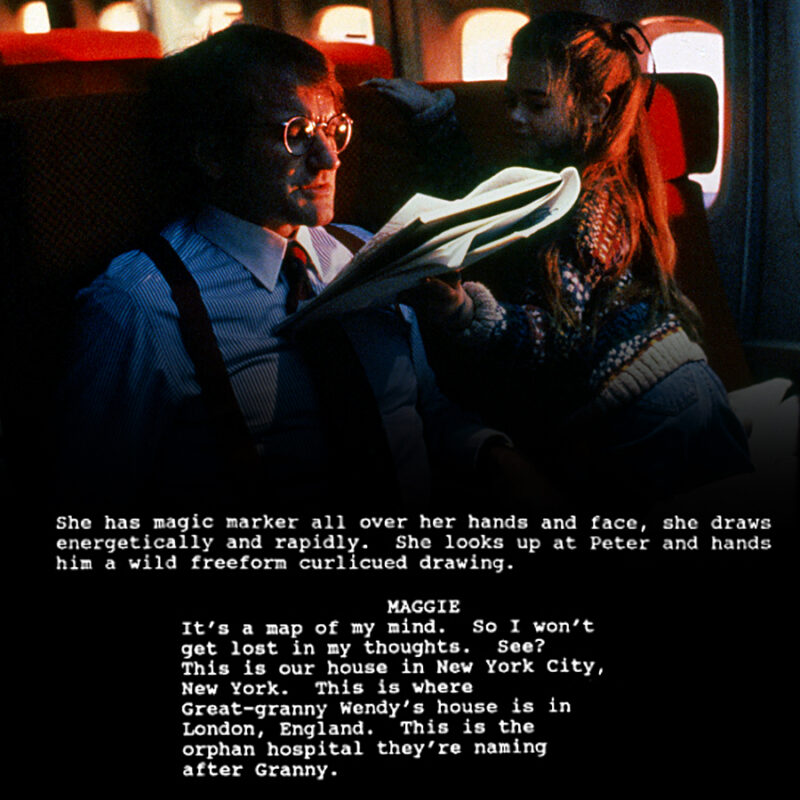
Read this way, Neverland is a theatre of memory. The original script gives the association a more concrete form during the flight to London, when Maggie shows Peter a drawing she calls a map of her mind. Here imagination helps organise memory. Aerial views of Neverland continue the idea through the compass submerged in the ocean. The island can be read both as a place and as a chart of something buried within Peter. The same visual language appeared in the advertising, with the teaser following a journey across a map and the main poster bordered by the scales and measurements of an old chart.
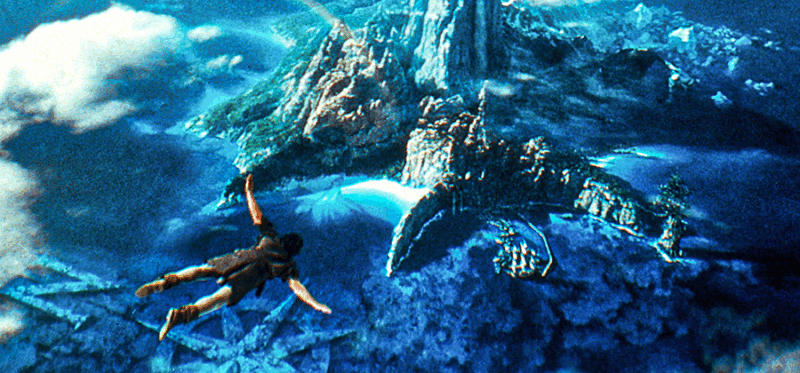
Peter’s inability to function in Neverland fits naturally within this interpretation. Spielberg described him as “a man without imagination,” a man who can no longer suspend his disbelief. Within a fantasy story, that prevents him from accepting the rules of Neverland. On another level, it can suggest that he has lost access to the mental space in which his own past survives. Imagination and memory come back to Peter together.
His adult identity reinforces the possibility. Peter Banning has become a corporate lawyer obsessed with control and with time. It’s a comic reversal of Peter Pan, and it may also be a wall built around memories of loss and abandonment. Forgetting Peter Pan would then mean forgetting everything attached to being Peter Pan.
For us, the central conflict is between memory and repression. Peter can only recover the person he was by returning to what he has avoided, symbolised by his return to Neverland.
The theatrical cut makes this aspect of the story less prominent. Its greater emphasis on Peter and Jack moves the drama toward a more direct family conflict, easier to follow and emotionally immediate. That rebalancing leaves some of the earlier design visible without always giving it enough space to develop, which may account for part of the unease the film can leave behind. What is often described as a flaw or imbalance may also be the remainder of a darker and more complicated structure altered after much of it had already been built.
Hook can still be understood as a story about growing up without losing one’s inner child. Spielberg’s own description opens another possibility alongside it: a film about amnesia, the cost of forgetting and the fear that can accompany remembrance. Placing those ideas inside Peter Pan ties childhood imagination to memory and survival.
Characters Deprived of Their Full Impact
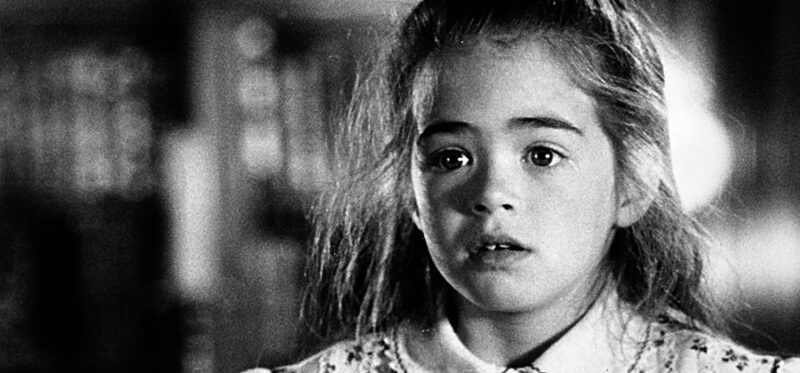
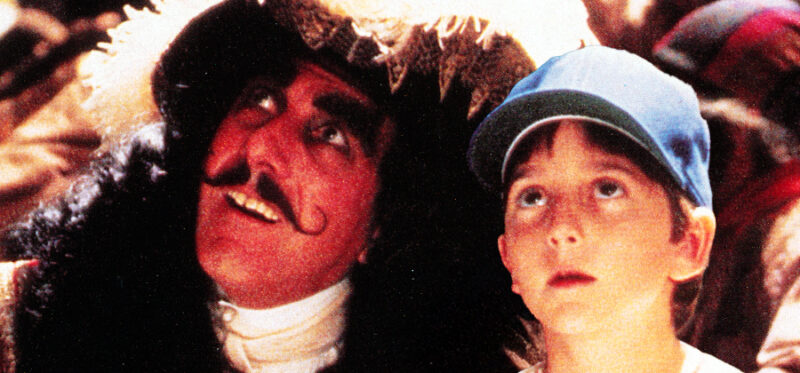
Jack and Maggie do more than motivate Peter’s rescue. They respond differently to a father who is physically present but absent in attention, and their separate paths can be read as two expressions of Peter’s own conflict. Jack moves toward forgetting while Maggie tries to preserve memory. The parallel becomes clearer as the story goes on.
Jack is drawn toward the validation he does not receive from his father. When a parent is physically in the room but mentally somewhere else, attention from another adult can acquire enormous weight. Hook understands Jack’s anger, encourages it and makes him feel that his hurt has finally been recognised. Hook gives Jack what Peter never did, and that’s why it works.
Through Jack, the film shows how a child’s need to be seen can loosen their connection to home and family when someone else offers recognition. Maggie responds very differently. Her imagination helps her hold on to what she knows. From the beginning, she resists the forgetting that surrounds Neverland. Jack accepts a new life and a new uniform, while Maggie continues to protect the memory of home.
The two children can therefore be understood as different responses to a wound. Jack allows another identity to replace what hurts him; Maggie keeps hold of memory even when doing so is painful.
That balance weakens as the film approaches its climax. Jack remains at the centre of the action while Maggie gradually loses her place in it. Because her resistance to forgetting has carried so much of her role, the reduction of her point of view also reduces one half of the opposition established between the children. Without Maggie’s journey being developed to the same degree, the film’s treatment of memory and emotional healing becomes less complete, and the counterweight she provides to Hook’s influence largely disappears.
The finished film doesn’t give Peter’s children room to be as complex as they were written.
Compassion as a Forgotten Force
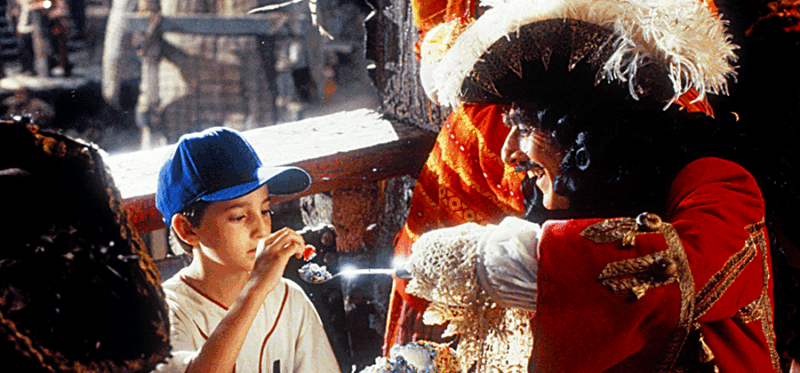
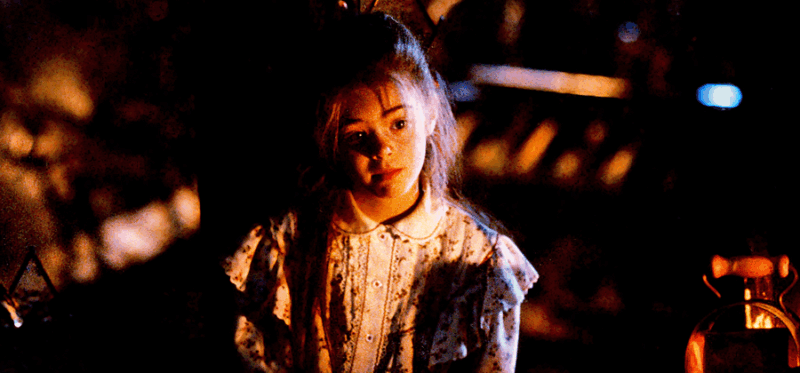
Maggie’s gradual disappearance becomes more noticeable when we consider the role she was meant to play among the Lost Boys. In the longer version, she becomes a steady, protective presence for the boys held by Hook. In a Neverland where memories continually slip away, she gives them stability through ordinary acts of care and attention.
She listens to the Lost Boys, and that reminds them of the parental affection they had forgotten. Hook rules through fear and manipulation; Maggie doesn’t try to control anyone. That’s her way of resisting him.
Through her, the film suggests that freedom also means being able to see someone else’s suffering again. Maggie talks about love and home, and those conversations awaken memories in the Lost Boys. She cannot erase what they have lost, but she gives them room to remember it.
Her role also connects with the film’s treatment of motherhood and the emotional ties between generations. Maggie follows Wendy and Moira as someone who can hold imagination beside reality and the past beside the present. Her empathy restores the Lost Boys’ memory of affection and can also be read as anticipating the same process in Peter. Wendy, Moira and Maggie form a line of women who keep memory and care alive.
Reducing Maggie’s arc therefore changes more than the amount of screen time given to one character. It removes part of the emotional opposition to Hook and shifts Neverland further toward spectacle and swordplay. The quieter conflict around memory and affection is still there, half-finished.
The Music That Speaks Without Words
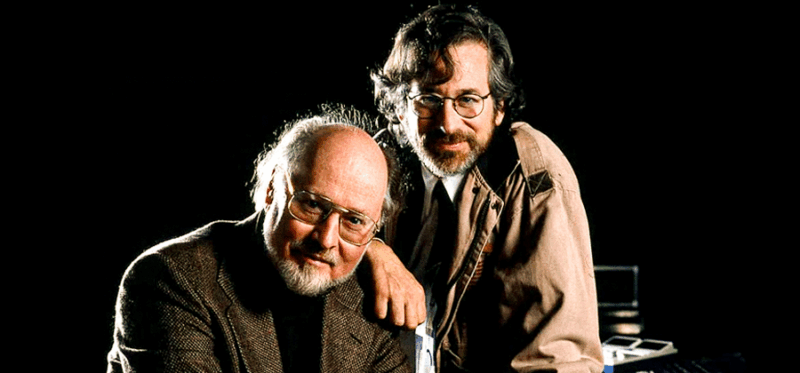
The music in Hook may offer one of the clearest traces of the film that almost was. Although it is not a musical in the traditional sense, several songs were written before filming began. Those songs never appeared on screen as complete musical numbers, but their melodies remained, woven into John Williams’ orchestral score in a different form.
The surviving themes often return in quiet or private passages, during silences and looks in which a character is changing before the dialogue has named that change. They accompany memory, regret and the first suggestion of hope. Repeated melodies also allow relationships to continue musically beyond scenes that once developed them more fully, leaving the score with connections that the shortened film does not always explain.
At times, the music seems to pull in a different emotional direction from the image. A joke or rapid chase may occupy the screen while the score introduces something quieter and more sorrowful underneath it. That does not necessarily mean Williams was consciously compensating for deleted material. The effect may simply come from music written for a story whose structure later changed. In the finished film, however, the score often preserves an emotional continuity that the editing interrupts.
The music can therefore be heard as a trace of an earlier form of the film, one with more room for contemplation and inner development alongside the spectacle. The release of the Ultimate Edition of the soundtrack, produced by Mike Matessino for La-La Land Records, made that structure easier to hear. It gives us the original songs and preparatory work in a more complete form, as well as a remarkable soundtrack to listen to on its own. More importantly for this discussion, it provides direct access to musical ideas created before the final version of the film had taken shape.
Those materials show how closely the music was tied to the characters and to the emotional build of the story. And one of the most powerful aspects of Hook’s score is the way the melodies from the songs retain the meaning of their original lyrics, even when those melodies are heard without words.
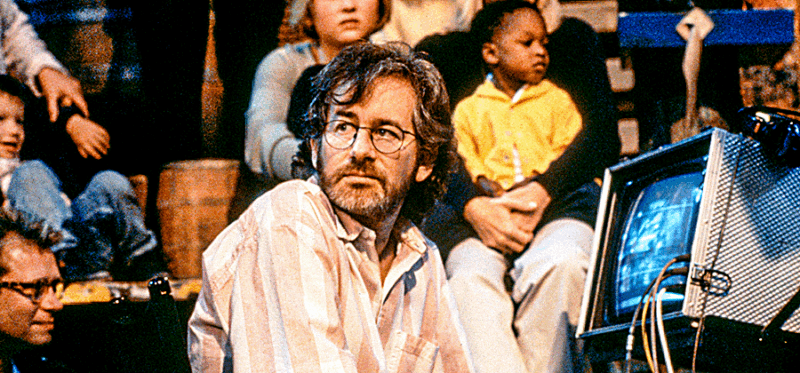
“Every movie I’ve ever made comes from a deep emotional place. Even the lighter, more playful ones come from pain. Even Hook has a deeper meaning in my life.”
A Deeply Personal Film for Steven Spielberg
Beyond its plot and its use of Peter Pan, Hook is one of Steven Spielberg’s most personal films. Spielberg has spoken about the deeper meaning the film holds for him, and James Hart’s script gave him material involving family, memory, childhood and unresolved wounds. These concerns appear elsewhere in his films as well, but Hook brings several of them together inside a story built around a man who has forgotten his own identity.
For that reason, the film can be read as something more complicated than a story about a businessman trying to repair his work-life balance. Spielberg has spoken openly about spending a long period of his life downplaying his Jewish identity, largely from fear of being targeted or standing out. Peter Banning’s amnesia can be compared with that experience without assuming that Spielberg consciously intended Peter as a direct representation of himself.
The parallel lies in the act of distancing oneself from a past in order to function in the present. Peter has achieved enormous worldly success after cutting himself off from the person he used to be. Spielberg’s description of his own relationship with his Jewish identity introduces the possibility that some of those feelings entered Hook, deliberately or otherwise. A filmmaker does not have to construct an explicit allegory for personal experience to shape the stories, images and conflicts that attract him.
Seen from that angle, Peter’s return to memory can resemble a movement from avoidance toward acceptance. “Becoming a kid again” would only be one part of what he is recovering. He is also accepting the painful history attached to that earlier self. The Banning family can then be read as giving fictional form to a tension between outward success and the parts of one’s identity that have been left behind.
Certain moments invite the comparison more strongly. The ceremony honouring Wendy at the beginning of the film can be read in relation to collective memory. Its staging echoes the kind of public tributes associated with people such as Nicholas Winton, who saved many lives during the Holocaust. We can’t prove Spielberg had Winton in mind. But the scene was already written this way in the script he signed on for, and we suspect it was one of the things that drew him to the project. Either way, it lets the sequence be read beyond Peter’s individual trauma.
Neverland can be approached in a similar way. At its simplest, it is a fantasy land occupied by pirates. Yet the imagery also supports a reading of a territory taken over by an authoritarian force that has imposed its rule and disrupted the history of those who lived there. Peter’s return then resembles a mission of liberation: someone who left home, built another life elsewhere and eventually returns to confront what happened there.
Peter travels from the United States to London and then to Neverland. That route recalls the path taken by American soldiers who crossed the Atlantic during the 1940s to join the war in Europe. It may be deliberate, borrowed from the adventure films behind Hook, or a coincidence.
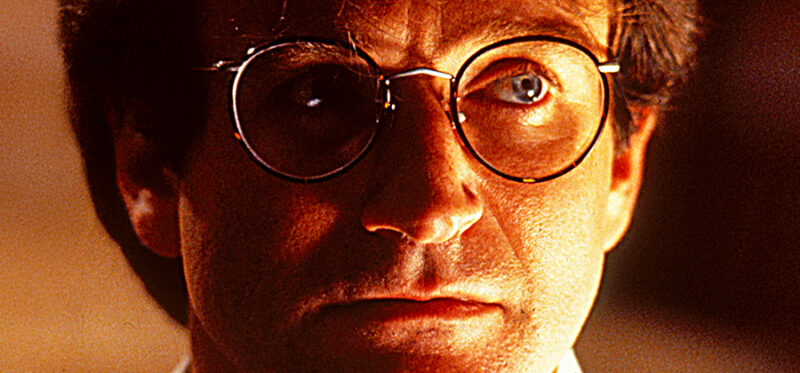
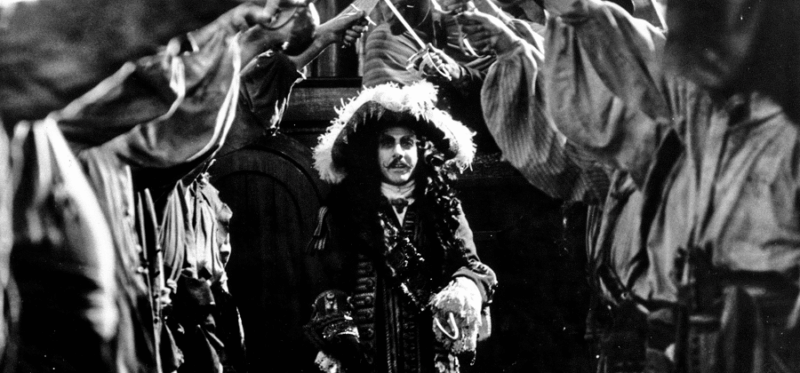
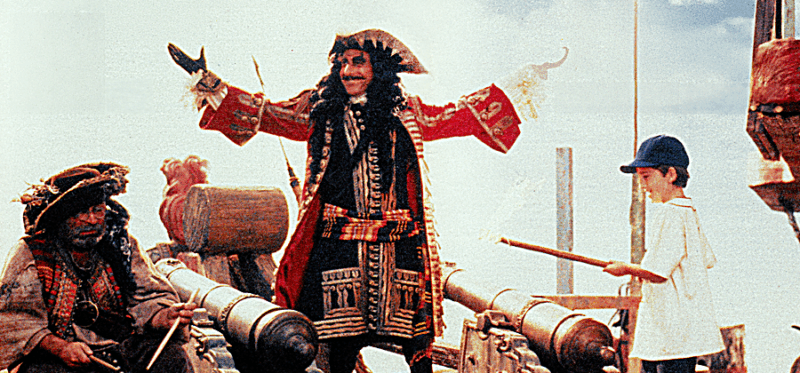
Captain Hook also takes on a darker quality within this reading. His revenge has kept him trapped inside the same conflict for years. He presents himself to the pirates as an idol, sustains a cult of personality and exploits the wounds of the people around him, including Jack. His hook turns his own injury into an emblem, while his crew resembles a professional army trained for a final war presented as the solution to its grievances. Violence has become part of Pirate Town’s culture, and Jack’s pain gives Hook another injury he can recruit into it.
The pirates also turn violence into commercial behaviour. Pirate Town is filled with prices and shop signs, and bargaining begins as soon as its inhabitants appear. Treasure maps, wooden legs, fish, eyepatches and cigars are all for sale, and one argument becomes a fight because a pirate refuses to buy another pirate’s trinket. Taken together, these details allow Pirate Town to be read as a form of authoritarian capitalism in which commerce, threat and oppression occupy the same space. Whether that political reading was consciously intended is another question; the elements themselves are there.
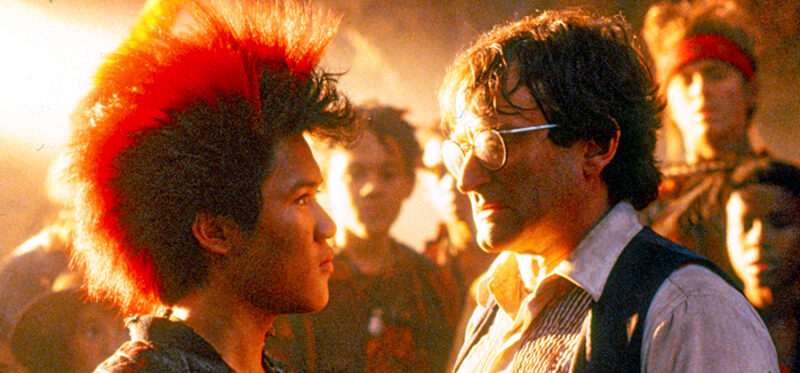
The Lost Boys offer a different model. Their life appears chaotic, but underneath the disorder is a community rather than a command structure. Hook requires submission; Rufio asks for a vote. That difference gives collective choice a place within the film’s conception of freedom. Freeing Neverland also means giving its people back their voice, their memory and the right to decide for themselves.
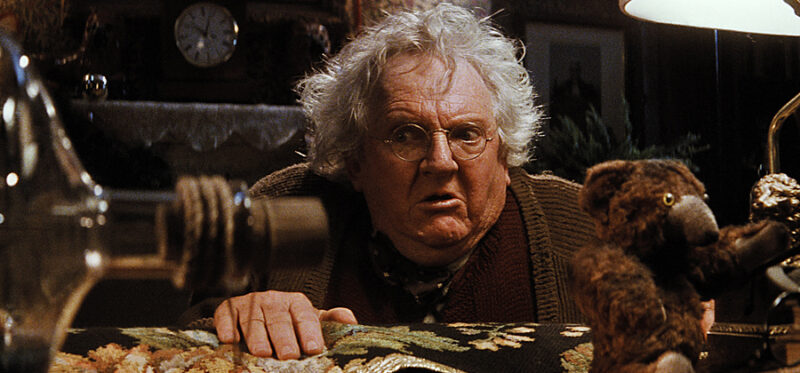
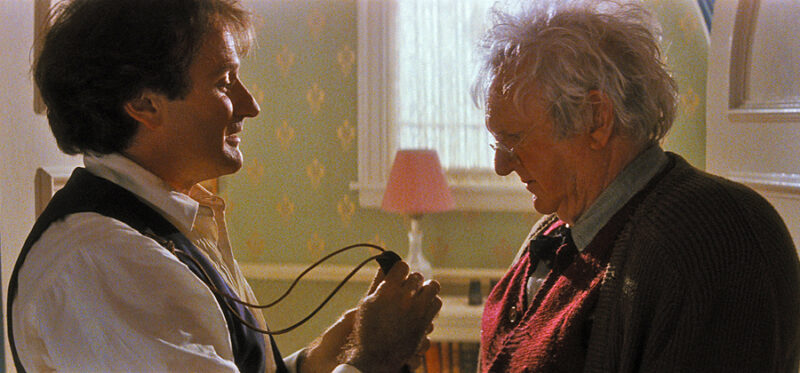
"I felt like a fish out of water making Hook. I didn’t have confidence in the script. I had confidence in the first act, and I had confidence in the epilogue. I didn’t have confidence in the body of it. I didn’t quite know what I was doing, and I tried to paint over my insecurity with production value, the more insecure I felt about it, the bigger and more colourful the sets became."
Tootles becomes particularly interesting beside these ideas. He can be seen simply as an eccentric former Lost Boy, but he can also be read as a survivor, perhaps even a refugee, whose life has remained organised around an old loss. Peter Banning appears to have protected himself through amnesia; Tootles has done almost the opposite. He remains trapped by what he remembers.
His fear when the pirates kidnap the children can be read as the reaction of someone confronted again with an event resembling his own earlier trauma. His fixation on his marbles also allows for more than one interpretation. They are toys within the story, but they are also the last physical link he possesses to his home, safety, identity and the life he lost.
The green gas surrounding the children’s kidnapping is more difficult to interpret. We do not think its presence should automatically be treated as proof of a Holocaust reference, but within the broader associations described here, the image is hard to separate completely from the question. Nothing allows us to say whether it was intended.
When Peter returns the marbles, the way he sees Tootles changes. What had appeared to be an eccentric obsession becomes connected to loss. In giving them back, Peter recognises what they mean to the man who has spent years looking for them. Tootles is then able to return to Neverland. His loss has not disappeared, but the recognition allows him to reclaim a place from which he had remained emotionally separated.
Hook also draws on the adventure cinema associated with Michael Curtiz and Errol Flynn. The Sea Hawk is especially relevant because its Golden Age adventure contains an allegory of Europe and German expansion during the 1940s. That influence was already present in James Hart’s screenplay, and Korngold’s music for The Sea Hawk was later used in Hook’s trailer and among its temporary tracks.
This background makes the wartime associations in Hook less isolated, although it still does not prove a deliberate historical allegory. Spielberg and Hart were working within a cinematic tradition in which adventure stories had already been used to address contemporary political fears. Some of that language may have entered Hook consciously; some may simply have accompanied the films and musical references they were drawing from.
The film also comes at an unusual point in Spielberg’s career. The Color Purple and Empire of the Sun had already moved toward heavier historical material, and Schindler’s List would confront the Holocaust directly soon after. Hook sits between the two: bright spectacle on the surface, and underneath, images of memory, displacement and authoritarian rule. We wouldn’t say it consciously anticipates Schindler’s List, but the echo is there.
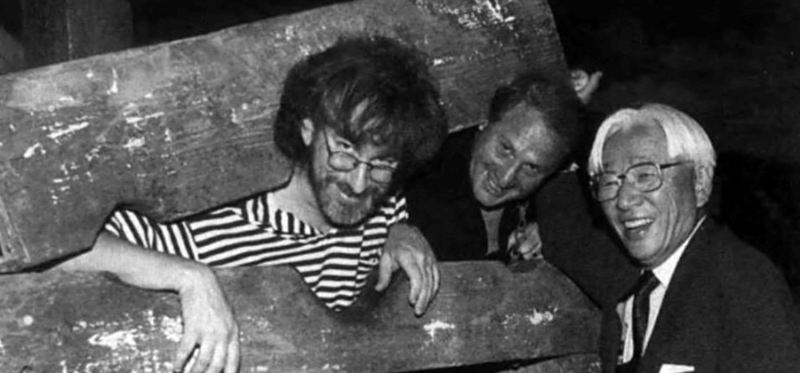
Even with the constraints of a PG rating and the need for a family-friendly tone, Spielberg keeps the violence relatively restrained without abandoning the darker implications of Neverland. The tension between those implications and the spectacle may explain why he trusted the opening and the epilogue more than the middle of the film: those are the parts where family, memory and loss can unfold without competing with the scale of Neverland.
Spielberg initially tried to give Schindler’s List to other directors because he doubted that he was the right person to make it. We find it tempting to place Hook somewhere within the personal movement that eventually brought him closer to that history. Peter Banning returns to a past he had kept at a distance and gradually accepts it as his own. To us, Hook may already have been a way for him to approach some of those subjects indirectly, under the bright colours of Neverland.
“Children’s Theatre”: Spielberg’s Self-Critique of Hook
Spielberg told film critic Ian Freer: “From the beginning of the picture to when Peter flies out of the window in Kensington is, I think, some of my best work. For some reason, the moment he gets to Neverland it sort of becomes children’s theatre.”
There is an irony in that criticism because role-playing and make-believe are already built into Spielberg’s Neverland. Much of what happens there follows the logic of children sustaining a game, in keeping with J. M. Barrie’s Peter Pan. What Spielberg later described negatively as “children’s theatre” is also part of the world the film deliberately creates.
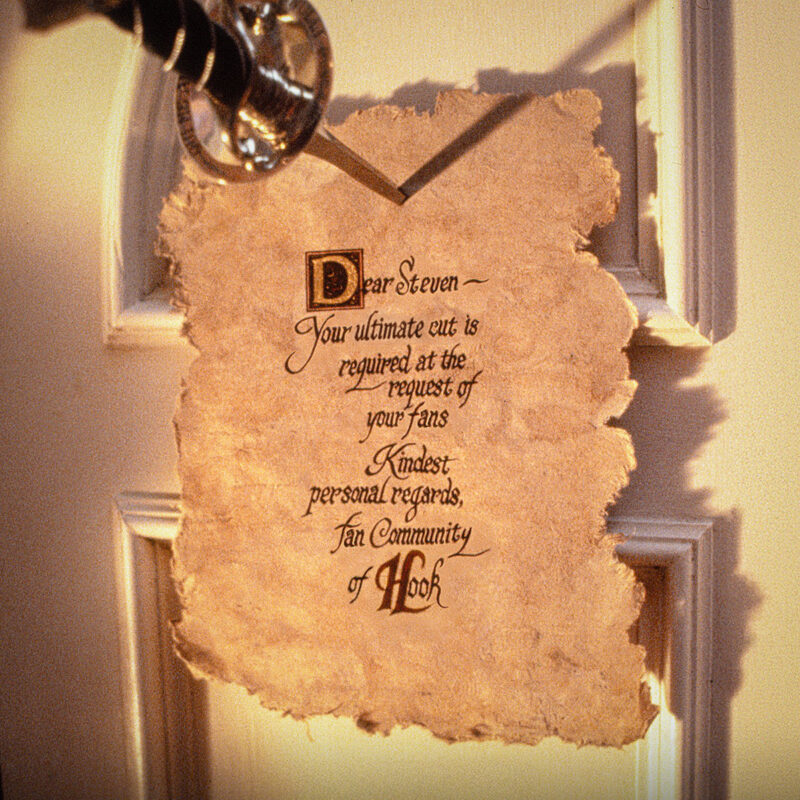
The note Captain “Jas. Hook” pins to the nursery door reads: “Your presence is required at the request of your children”. Within the story, it is simply Hook’s summons. It can also be read as an invitation for Peter to take his place again in Neverland’s performance, accepting a role before he remembers that it belongs to him.
During production, Spielberg described Peter Banning, still unaware that he is Pan, as “a face in the crowd”. Neverland turns that phrase into an image. Dressed as a pirate, Peter disappears among Hook’s followers and cheers for their captain. He eventually removes the disguise when he faces Hook, but he continues to reject the past that the costume has been hiding.
The adult Peter also shares some qualities with the enemy he once opposed. As a work-obsessed lawyer, he has become almost the opposite of Peter Pan and needs Hook to force him out of the pattern in which he is trapped. This gives the title another possible resonance. Hook obviously names the pirate, but it may also point toward the traits Peter Banning has come to share with him.
"Hook was always a deeply personal project for Spielberg. He set out to make something truly moving and intimate, but the realities of production, especially the pressure to trim the runtime, kept him from fully realizing that vision. It was incredibly painful for him to have to cut twenty percent of the final edit. Even though the movie became a massive hit at the box office, it didn't feel like a win to him. In the end, he just wasn't able to make the film he had originally envisioned."
The Existence of a Longer Version
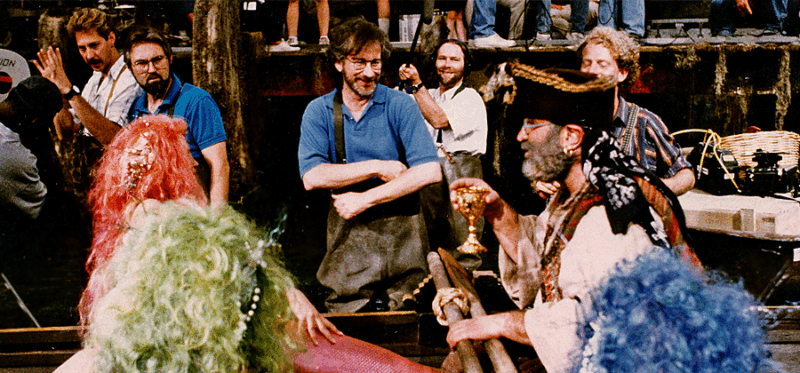
A longer, more complete version of Hook existed. Before the film reached theatres, an extended cut was shown at a test screening in Dallas on November 9, 1991. The screening establishes that the film was once assembled in a substantially more expansive form than the version eventually released.
The reported audience response to that test screening was a 96 percent approval rating. Accounts of the editing process describe substantial cuts made under pressure to reduce the running time. A large body of filmed material was removed, although the exact combination of deleted scenes included in the Dallas version has not yet been established.
The mixed reviews intensified Spielberg’s frustration and quickly fixed Hook’s reputation as a disappointment, obscuring much of its depth and ambition. The way audiences regard the film has changed considerably in the years since. Hook has continued to stay with people across generations, inspiring a degree of affection and reflection that few family adventures achieve.
There is still a hope that Spielberg might one day look back on the film with more peace. Perhaps he would continue to see the weaknesses that have bothered him for years; perhaps distance would allow him to see more of what audiences found in it. For us, Hook is a sincere and ambitious film, and its reception never did justice to what it attempted.
“I don’t have to keep studios happy. A long time ago I felt I did. I don’t feel that anymore. I don’t feel like I’m working for anybody but myself now.”
A Work That Deserves to Be Revisited
Knowing that a substantially longer Hook once existed changes the way the theatrical version can be examined. It was one completed shape among others: a tighter version made after heavy cuts. Those changes also affected the balance between characters, transitions and the different strands of the story.
Some of the unevenness in Hook may therefore come from the editing process rather than from the conception of the film itself. Missing transitions and characters who recede too quickly can be read as traces of material that no longer surrounds them. We cannot assume that every weakness would disappear in a longer version, but the existence of that version gives us a reason to ask how much of the surviving film was altered when its structure was compressed.
Deleted or shortened material can change the way a film’s remaining scenes relate to one another. A character motivation, a musical theme or an emotional transition may become clearer once the material around it is restored. Revisiting Hook this way would show how the version we know was built.
Its emotional foundation is still present, and much of the original vision can still be felt, even where the development seems to have been cut short. A restored version could show whether the balance we sense in the surviving film was once more fully developed.
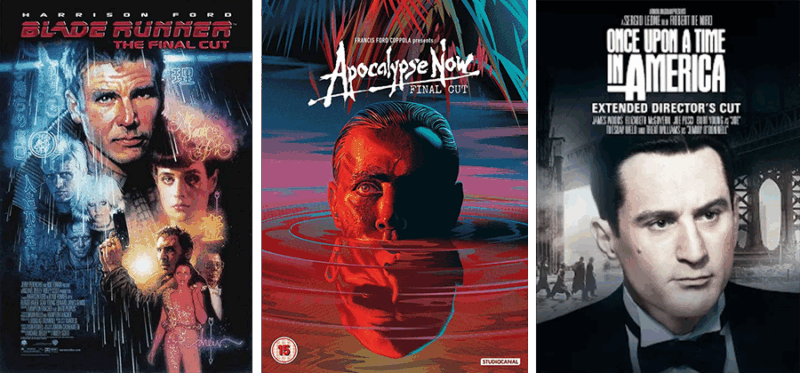
Hook is not the only film whose theatrical version came out of heavy cuts. Many others have since been released in extended or restored versions, and Hook deserves the same chance.
A Call to Rediscover Hook
What we’re asking for is a restoration of material that already existed: a new edit, a different rhythm, and the return of scenes that could bring back part of the emotional structure lost in the final cuts. This could help bridge the gap between the second act and the more intimate logic established in the opening scenes.
Even relatively small changes could give the film’s existing ideas more room. Silences, shared looks and character development need time to register, particularly in a story built around the gradual recovery of memory. Restoring that space would let the existing material develop with more continuity.
A fuller Hook would exist alongside the theatrical version, which would keep its history and everything it has meant to people. It would also help us see which of the readings explored here hold up.
Sign the Petition
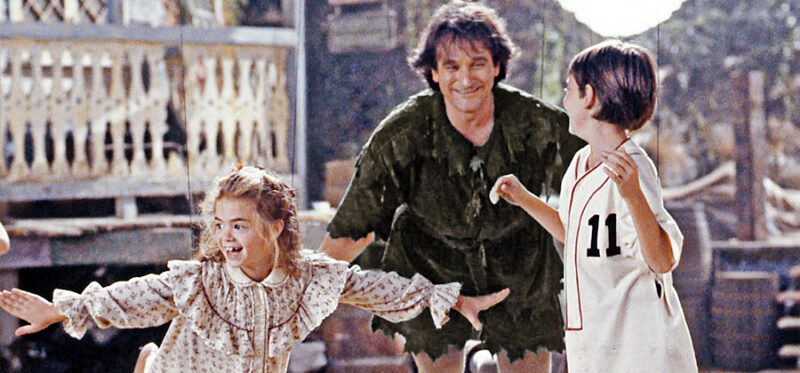
This initiative comes from our affection for the film we grew up with, and from the conviction, built over years of research, that the version first assembled had more to give. Hook has often been dismissed without much consideration of the circumstances in which its final form was created.
We hope that a more complete version might one day allow its ideas to reach both the audience that already loves the film and people encountering it for the first time. Some of the readings explored here may reflect deliberate choices by Spielberg and his collaborators. Others may come from influences, personal concerns or associations that entered the film without being consciously planned. A restored cut would help us tell which is which.
This year marks the film’s 35th anniversary. At a time when violence so often wins over compassion, Hook’s concern with memory and reconciliation feels especially valuable. This would be a fitting moment to let those ideas occupy their full place in the film.
Thank you so much for taking the time to read this.
Please, Mr. Spielberg, release the Ultimate Cut of Hook.
The petition is available at the following address: