Deleted scenes
Act 1
The school Play
The Meeting
The flight to London
The Lost Cufflinks
Light in the Nursery
The Bannings In Distress
The Forgotten Past of Peter
Tink in the Dollhouse
Act 2
Welcome to Pirate Town
The Captain Hook
Captain Hook’s speech
Hook Challenges Peter
The Mermaids Save Peter
The Lost Boys
Rufio challenges Peter
Lost Boys Introduction
Peter's Lost and Found
Hook’s Lamentations
"Believe your eyes"
The Lesson
Hook, King of fun
A Bedtime Story
Peter's memories
Maggie And The Slave Boys #1
Peter's Memories
Peter's Training
Baseball Game
Memory Recovery
Act 3
The Celebration Party
Peter's Past Adventures
Maggie And The Slave Boys #2
The Final Battle
The Ultimate Duel
Farewell, Neverland
Kensington gardens
Back To Home

Introduction to Act II
The deleted scenes from Act I weren't there to pad out the exposition. As already established, they laid the real thematic groundwork, offering a far more interior reading of Hook than the one that reached theaters. Peter's problem was never simply that he'd become an absent father. It ran deeper, into a break with memory, imagination, childhood, and the basic capacity to believe in anything at all. Hook, in that light, stops functioning as a straightforward external villain and becomes something closer to a mirror, the personification of whatever Peter absorbed or buried in himself: cynicism, control, arrogance, domestic tyranny. Neverland follows the same logic. It isn't a place so much as a mental space, a map of the mind where Peter has to recover what he's lost while confronting what he's become.
Act II is considerably harder to work through. Act I, for all its cuts, still holds a progression that can be followed scene by scene, more or less in the order intended. Act II doesn't offer that same stability. This is where the bulk of the cut material sits, and it refuses to stay put. An idea surfaces in one draft, disappears from the next, then resurfaces in the finished film wearing a different shape entirely.
That's the real complication. It isn't only that scenes were cut, it's that fragments of some scenes were recycled into places the scripts never intended. A scene can technically survive into the film we know while no longer doing the job it originally did, disconnected from whatever it once led into or grew out of. The constant rewrites make this worse. Pinning down exactly where a scene belonged, what it was meant to accomplish, what came immediately before and after it, depends on which draft happens to be in front of you.
Take the Lost Boys' bedtime scene, when Too Small shouts "Goodnight Neverland." In the finished film it lands after the food fight. But that placement doesn't hold up. Its proper spot comes later, after Hook's own bedtime, in the scene where Smee first proposes turning Peter's own children against him.
The difficulty, then, is less about recovering what was cut than about locating where certain scenes we already know from the finished film were originally meant to sit, standing in for deleted material that we'll get into below. The structure and the list laid out on this page follow what seems to be the most stable version, since it's the one that appears finalized in Terry Brooks's novelization.
Welcome to Pirate Town
Peter drifts down unconscious, wrapped in the parachute Maggie sewed for him. He wakes still cocooned in white fabric and assumes for a moment he's dead, until Tinker Bell tears an opening in the cloth. What waits on the other side is Pirate Square, dominated by the carcass of a stuffed crocodile with a broken clock wedged between its jaws.
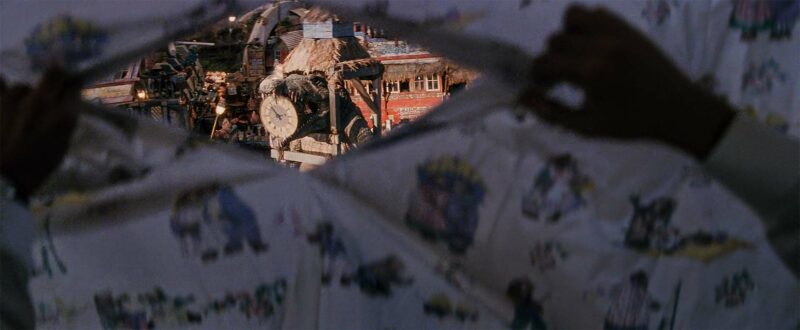
Peter on the roof of Molen’s Soup Kitchen, discovering the Croc Tower
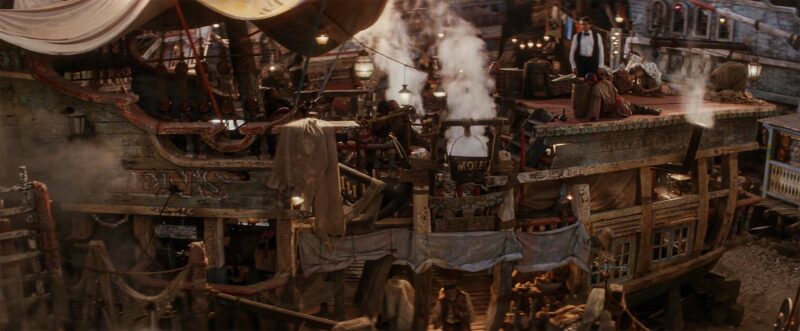
Peter, completely lost on the roof of Molen’s Soup Kitchen
On the kitchen table, Tinker Bell is trying to convince Peter that he's not dreaming.
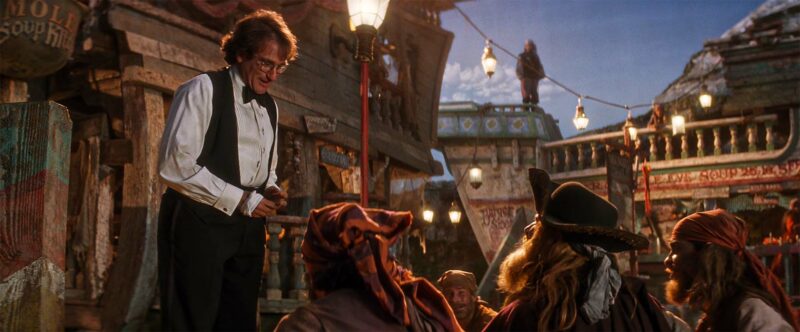
Peter during his second confrontation with the pirates, his hand bandaged after Tink has cut it.
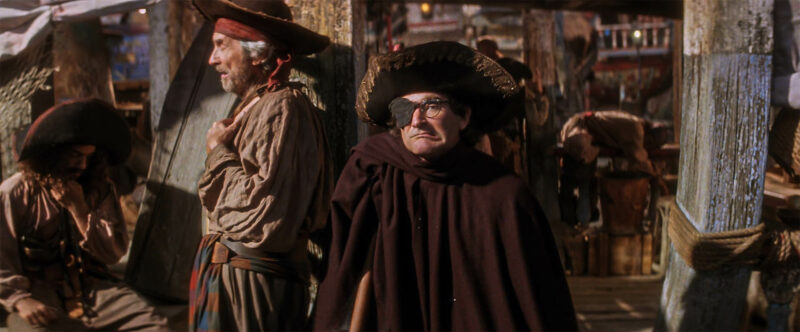
Peter, in disguise, leaves the kitchen
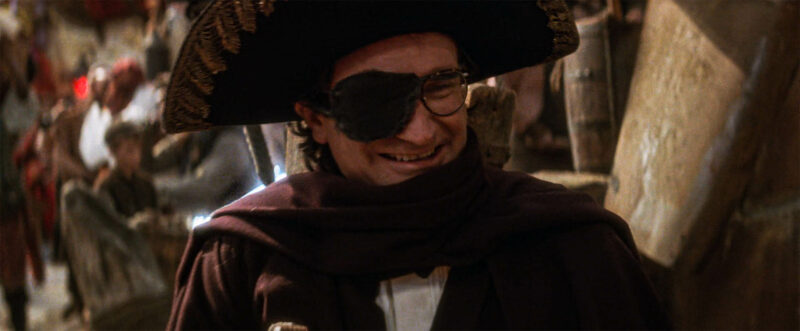
Peter, amused by the street musicians as they start to sing "Low Below"
All
Down in the deep below, full fifty fathoms,
Dead men are sure to get to sleep tonight.
All
You'll meet your mates below: hale an' hearty dead men!
Bed, board an' keep are very cheap! Dead right!
Low below, we're food for all the fishes!
Low below, they're havin' us for lunch!
Low below, the fishes can be vicious!
Down at fifty fathoms where the wind don't blow!
Where the sharks'll chew your bones!
Turn your teeth to coral stones!
Near the grave of Davy Jones,
Low below!
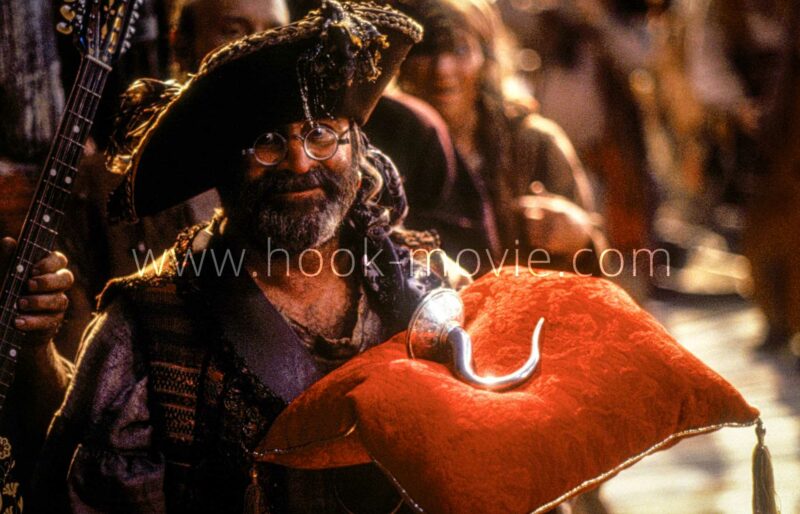
Smee holding the Hook.
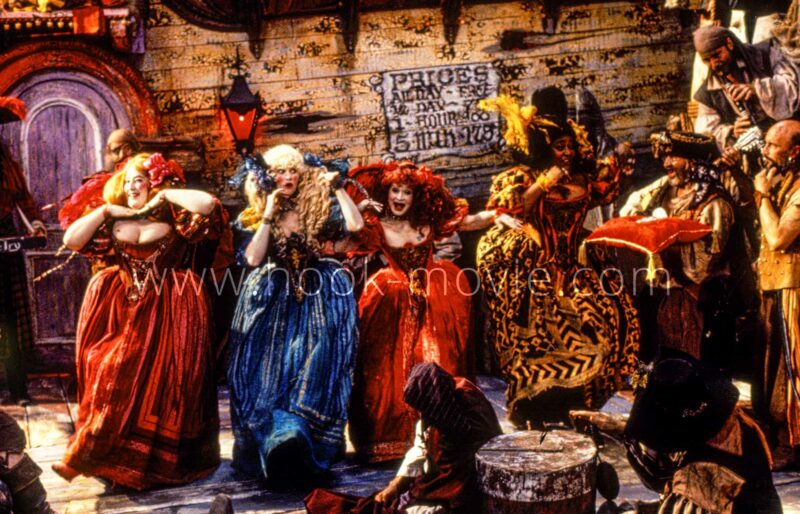
Pirate wenches welcome Smee, dancing and singing.
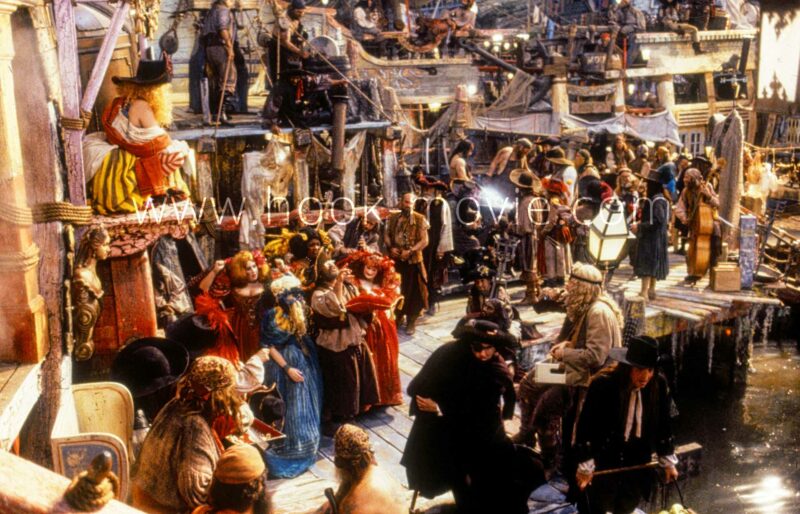
The whole dock bursts into life.
Hooker #1 Mary
"Look--look! s'gotta be Hook's hook!"
Hooker #2 Beverly
"Well, you should know!"
Hooker #3 Kim
"Symbol of fortune and fame!"
Hooker #4 Randi
"Keep the fame, I'll take the fortune!"
Hooker #2 Beverly
"James Hook, son of a sea cook."
Hooker #1 Mary
"That's not all he's a son of..."
Hooker #4 - Randi
"Jimmy is our claim to fame."
Hooker #3 Kim
"Him and few hundred more I could mention..."
All hookers
"Swordsman, poet, debaucher! Hobbies:"
Smee
"Sailing and torture! Hookers, beautiful lookers!"
All hookers
"That's what he calls us."
All hookers
"Jimmy created our name! James Hook, son of a sea cook! Jimmy is our claim to fame. (wobbling arab noise)"
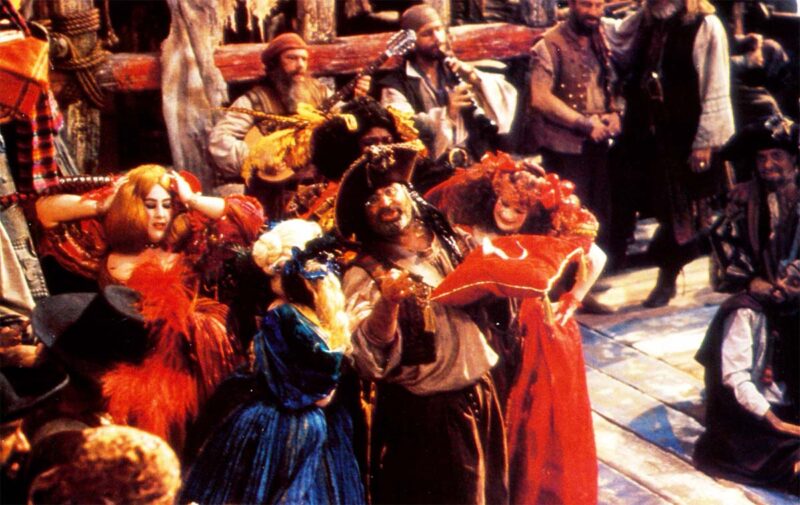
"Sailing and torture! Hookers, beautiful lookers!"
They spun and laughed, still singing, then drifted away, leaving Smee slightly flustered but grinning. Peter, jostled by the crowd, found himself only steps away, almost seen.
Smee ducks into a barber shop next, for a "bad-boy chop," paying with a coin on a string that he pulls back, flicking the barber a copper coin instead of the gold one he pretended to toss.
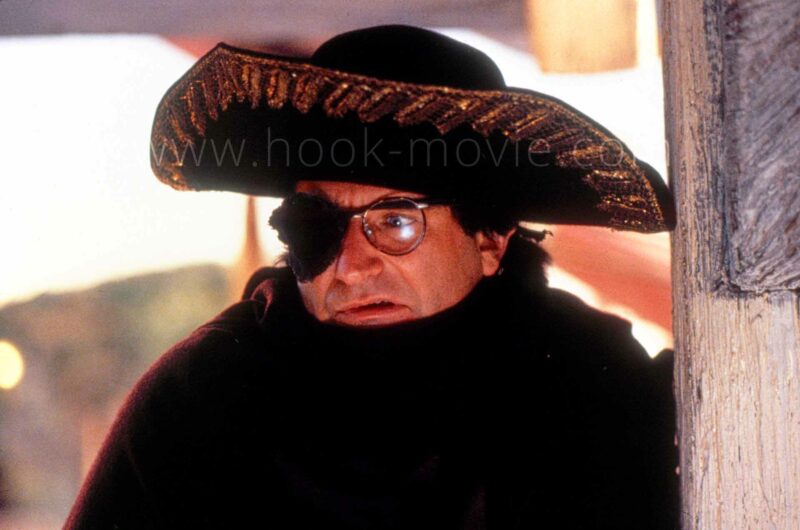
Peter stepped into the barber's shop
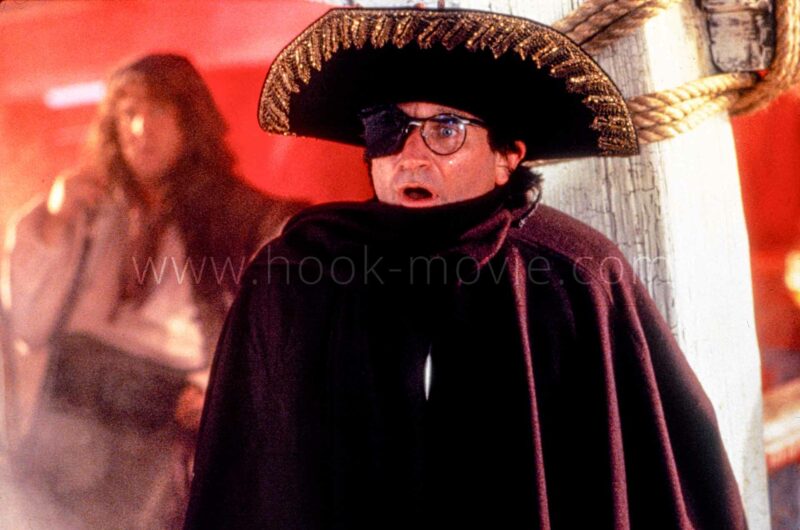
He watches the scene, dumbfounded
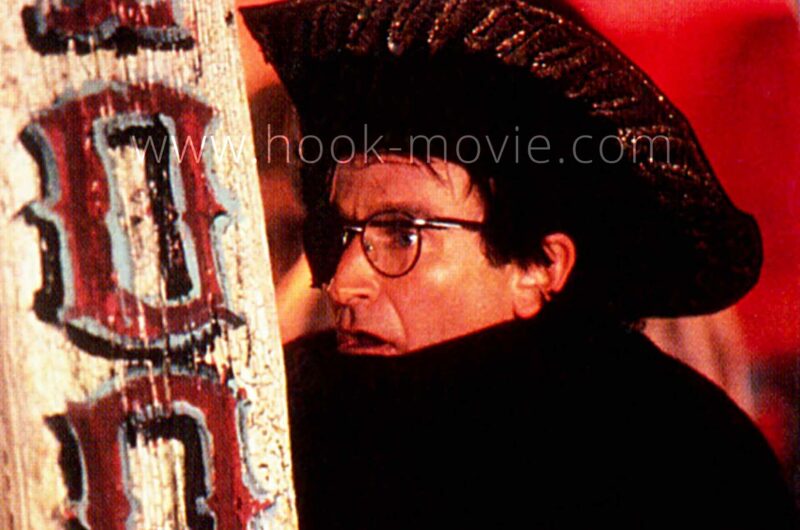
Stunned, his eyes fixed on Smee and the pirates
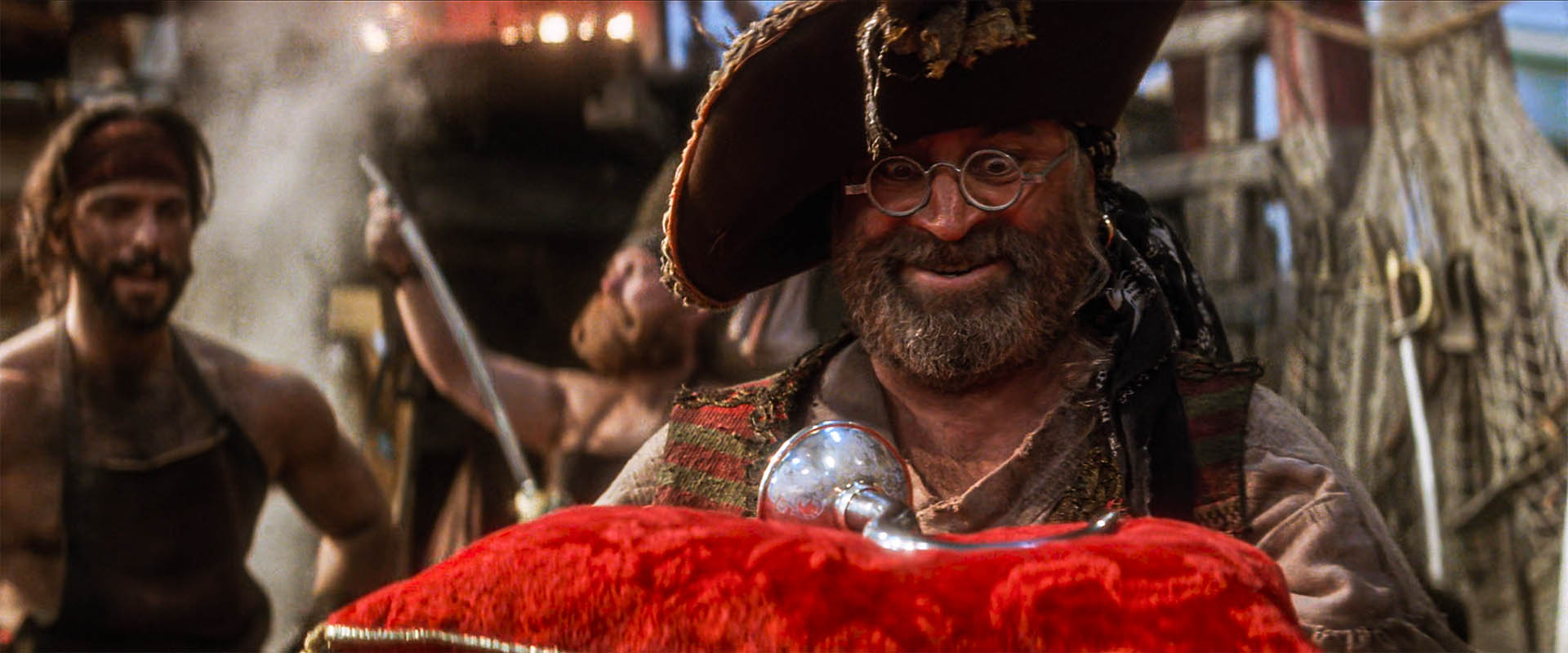
All
"Yo ho ho!"
Pirates #1
"Sir!"
Barber
"Aye?"
Pirate #1
"Listen, I want to look as fierce as Hook!"
All
"No dissin'!"
Pirate #2
"Homey--"
Barber
"Hmmm?"
Pirate #2
"Ya got an eyepatch--show me!"
All
"Fresh!"
Pirates #2
"What a catch I am!"
Barber
"A hole? A mole?"
Pirates #2
"Heads are gonna roll."
All
"Gonna eat 'em up whole!"
Pirates #1
"Now you'll chill them to the bottom of their souls!"
All
"Yo ho ho!"
Barber
"Yo Smee, s'up? How 'bout a Hook tattoo?"
All
"Word up!"
Pirates #3
Knock me in me mouth with a hammer--oooh, so rough I am!
Barber
A snip? A flip?
Smee
"A bad boy clip with a captain hook tip."
Barber
"Brother, better not trip or I'll bust yer lip!"
All
"Yo ho ho!"
Pirates #3
"This Peter Pan high boy, he ain't no flyboy--"
Pirates #1
"He'll take 'im, and break 'im."
Pirates #2
"And shake 'im!"
Barber
"And bake him!"
Smee
"And make him give his propers to Hook!"
Then Smee makes a quick detour through the dentist's shack, where a pirate's tooth won't come loose. Smee lends a hand while still balancing the hook on its pillow; Peter gets pulled into the effort too, and between the dentist, Smee, Peter, and Tinker Bell all pulling together, the tooth finally flies out.
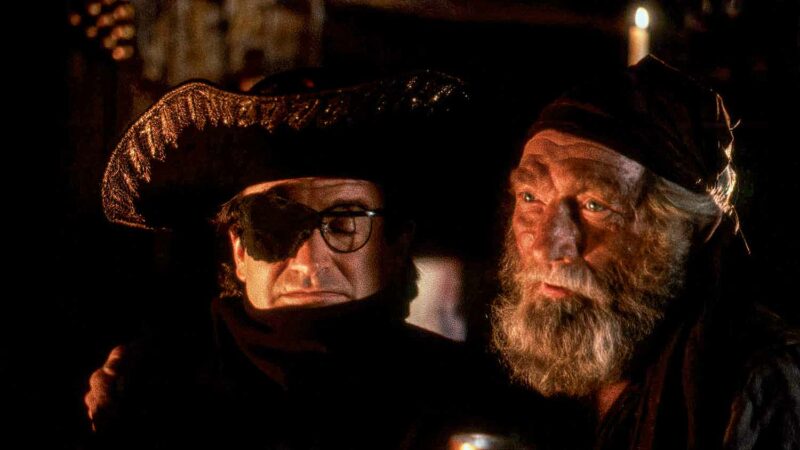
Peter and the pirate dentist
All
"It's fun to maim, kill and plunder, drink till you're dead."
Pegleg #1
"It's lovely playin' football with a human head."
Pegleg #2
"Or dunkin' kids in a hot pot--"
All
"--"praps" two or three! We boil 'em one by one!"
Pegleg #3
"They're tasty when they're done!"
Pegleg #4
"Delicious eatin' children's ears for tea!"
All
"Two-three-four! It's hell to lose a limb."
Pegleg #1
"Like him--"
Pegleg #2
"An' him--"
Pegleg #3
"An' him!"
All
"But quite a nifty way of losin' weight!"
Pegleg #4
"Too true mate!"
Smee
"And don't forget you knee was once a tree! Drinks're on Smee."
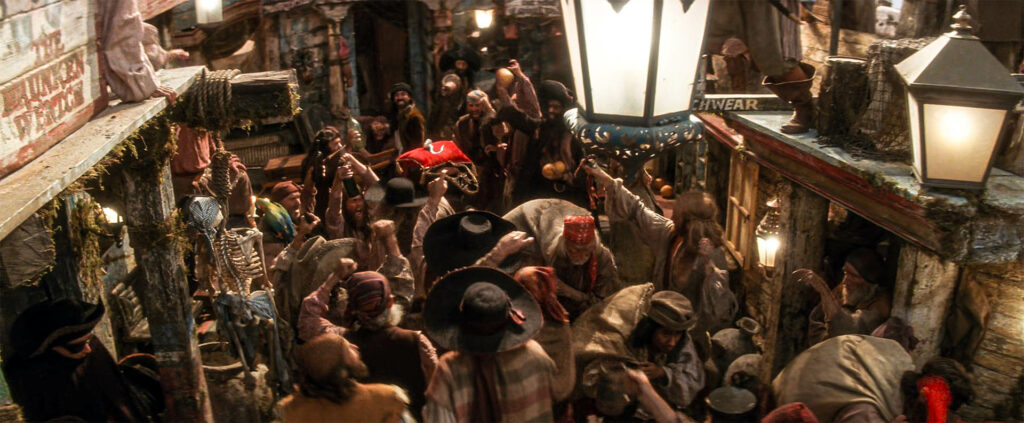
Smee leaving the tavern and leading the pirates toward the tunnel leading to the Jolly Roger
Peter forces himself onward despite the pain, his children on his mind. Smee, increasingly pleased with himself, enters a tunnel of old ship hulls, glowing with torchlight and smoke. Peter follows into the darkness, eyes stinging, voices echoing through the passage chanting "Hook," until he finally emerges into sunlight.
All
Low below, where dead men go,
Low below, the time goes slow,
Low below, your bones’ll show,
There’s the grave of Davy Jones: low below.
Smee has slowed near a pen guarded by two pirates, Billy Jukes and Noodler, holding four shirtless boys who are crying and begging. Smee greets the guards cheerfully and walks on, whistling. Peter stops, horrified: they're just children. Tinker Bell, hissing with anger, tells him Hook is a filthy slaver, forcing his prisoners to count his treasure over and over again. Nearby, a betting booth displays two boxes where pirates wager on who'll win between Hook and Peter Pan: Hook's box overflows with coins, Peter's holds a single one.
Behind them, a roar rises. A flood of pirates surges out of the tunnel, singing the chorus of "Low Below" at full volume, and sweeps Peter along toward the harbor. They pass beneath a sign reading Good Form Pier and arrive at the only ship still afloat and intact: the Jolly Roger, Captain Hook's fortress, black and red, bristling with cannons, the crew chanting for their captain.
All
Hook! Hook! Hook!
Show us the Hook!
Give us the Hook!
Peter, hesitant, has no say in the matter, pushed along with everyone else onto the deck. Smee disappears into the cabin carrying the Captain's new hook, while the pirates gather to wait.
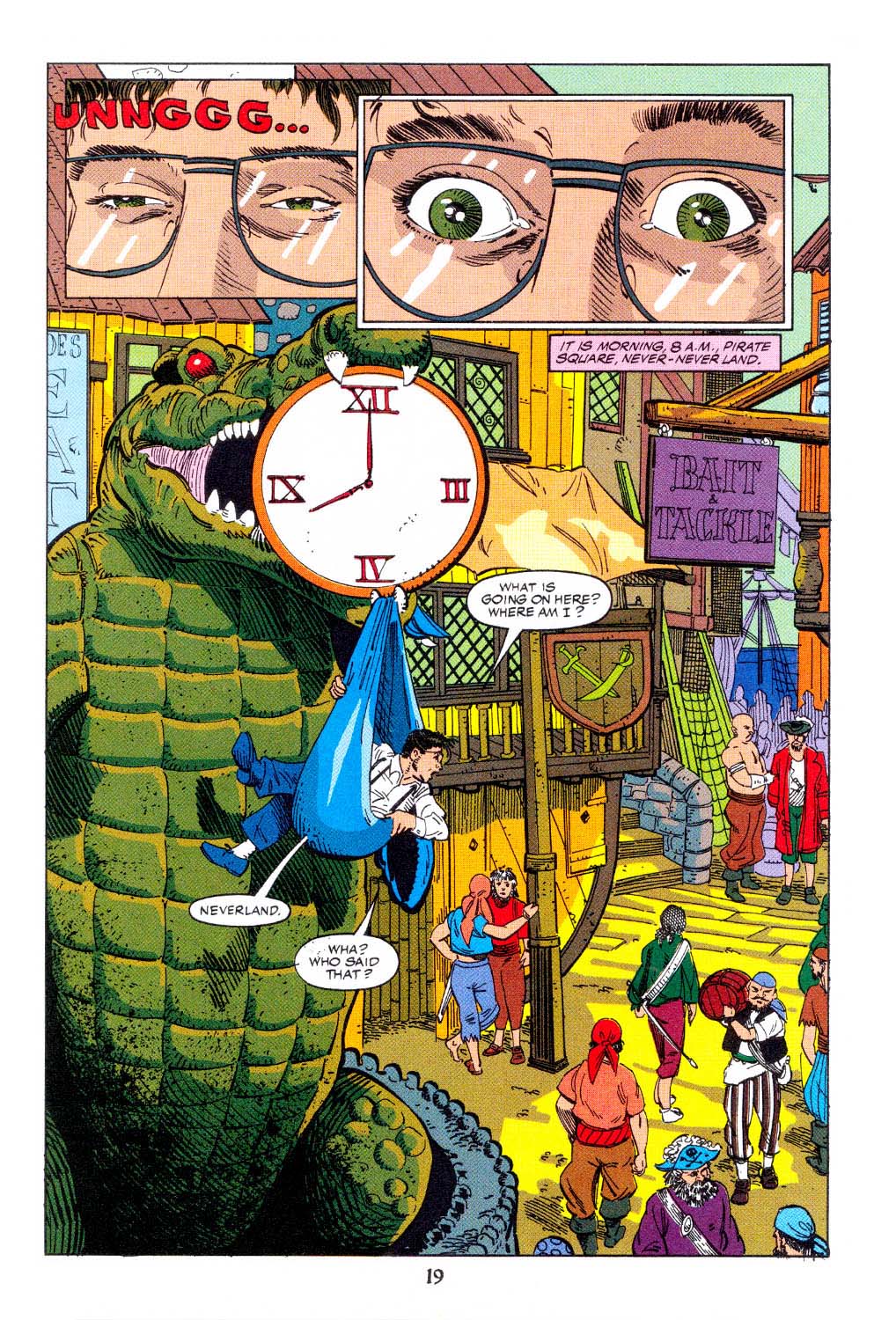
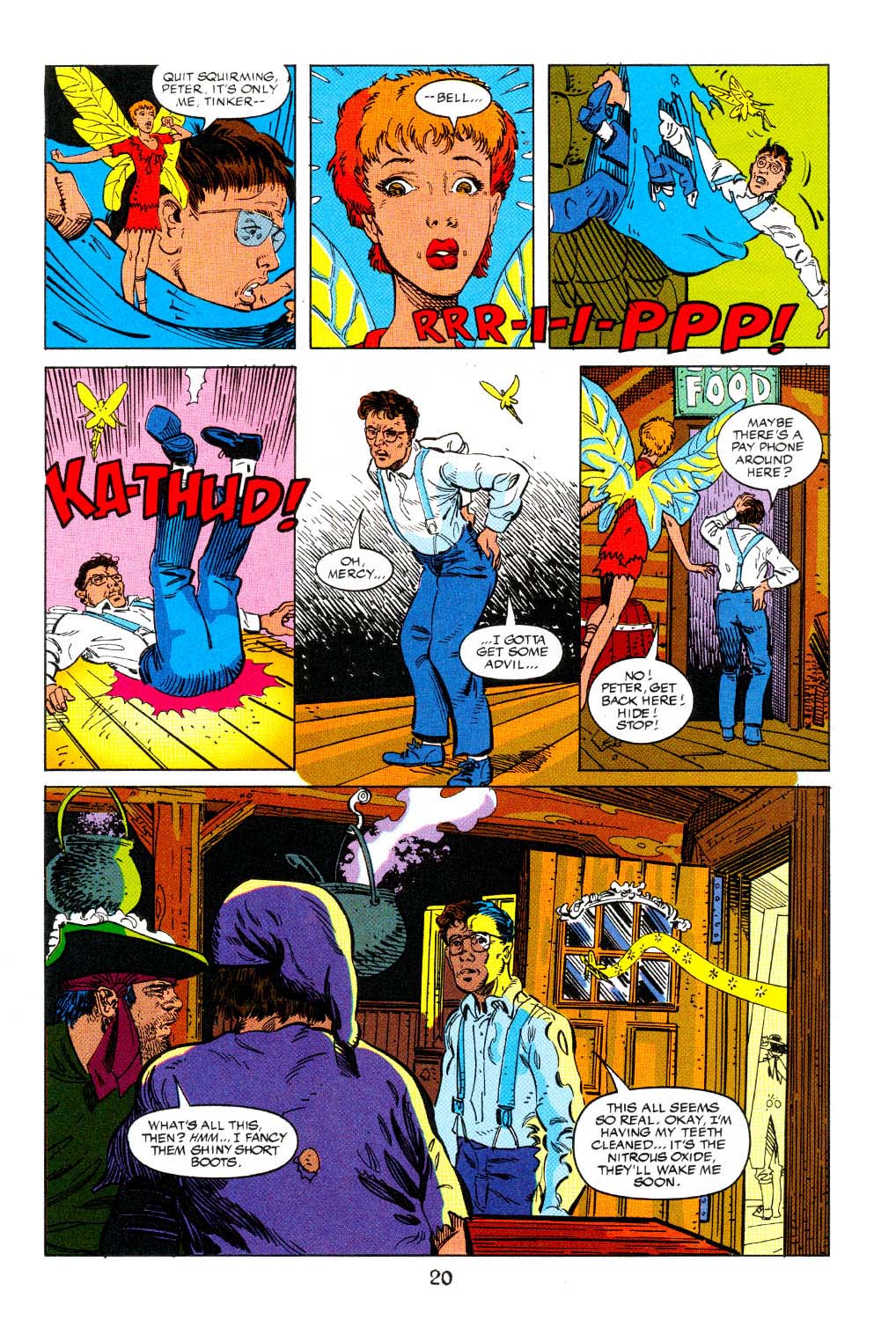
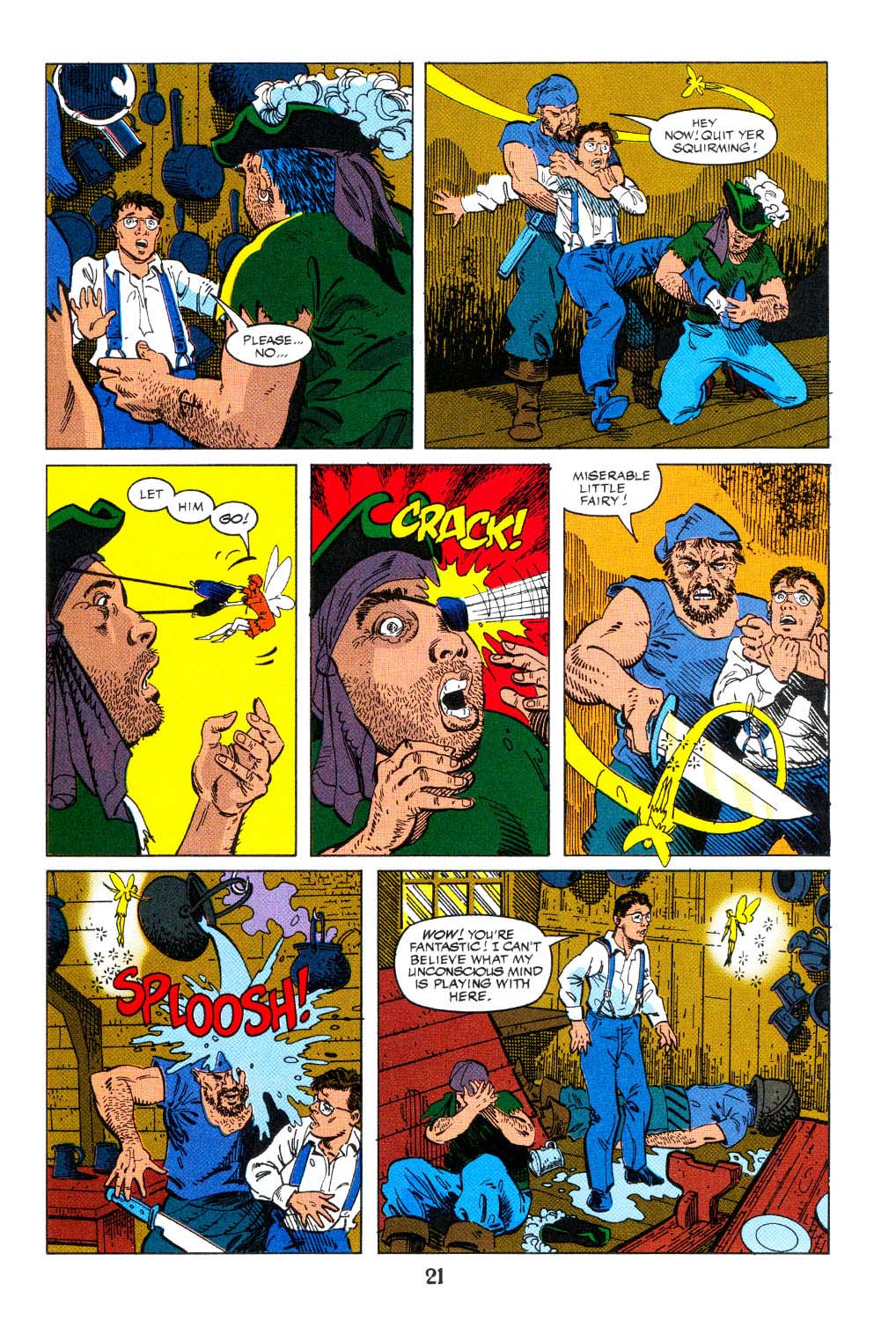
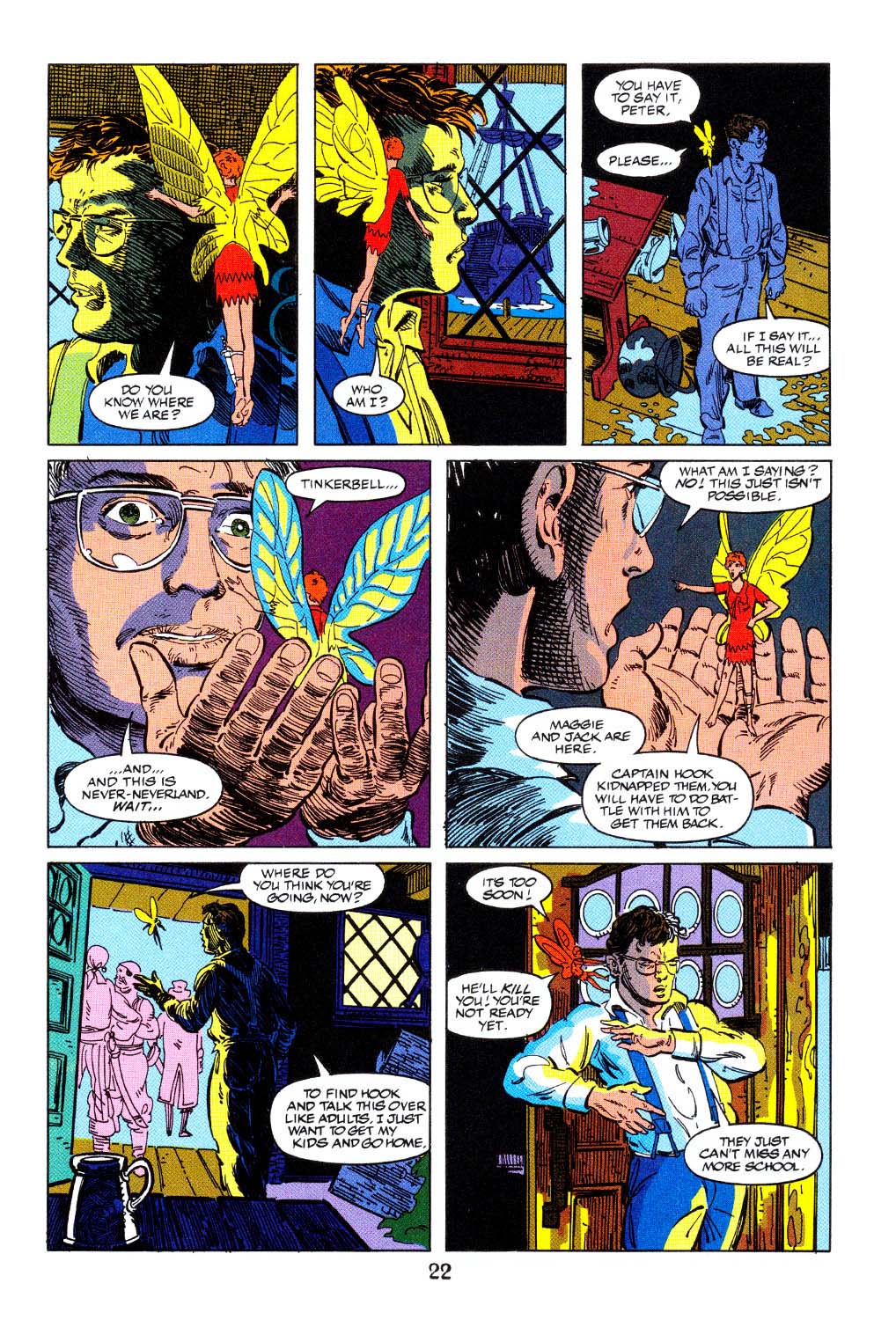
That instinct to file the town under amusement park or medical nightmare says more about Peter than about the town. An amusement park is the purest example of profit extracted from an artificial world. That's exactly what Pirate Town is, and exactly what Peter's own resort project back home amounts to: something built at the expense of whatever ground it stands on.
It’s worth noting that the kitchen is named “Molen’s Soup Kitchen,” which is clearly an easter egg referencing producer Gerald R. Molen. Fittingly, the pirate cook who attacks Peter with a large kitchen knife may have been portrayed by Molen himself. We have no clear indication or confirmation that the character was intended to be portrayed by Gerald R. Molen as a cameo.
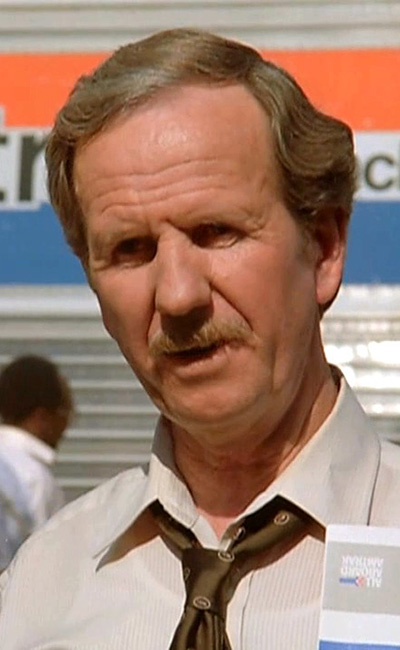
Producer Gerard R. Molen
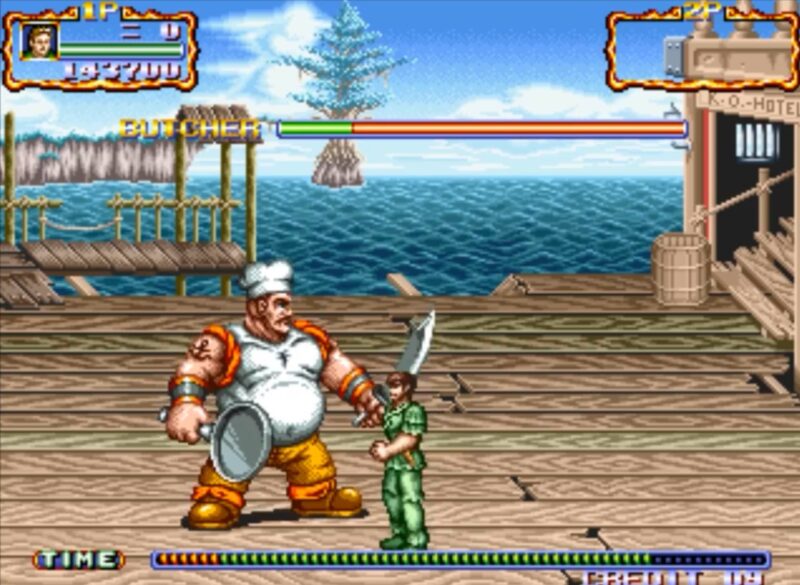
The giant cook is the first boss in the arcade game, developed by IREM
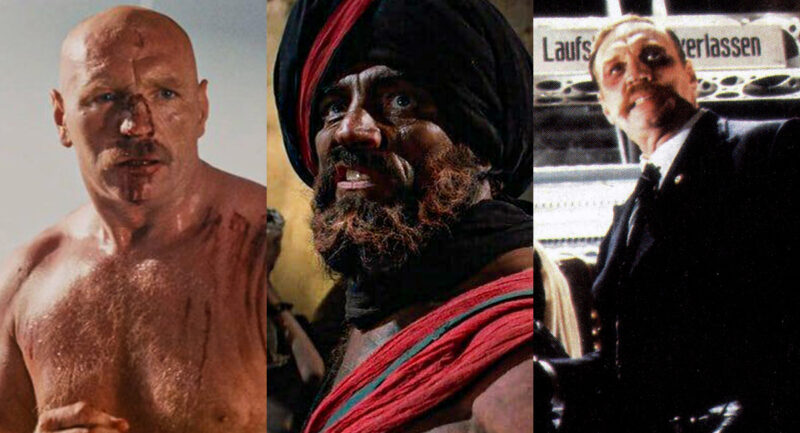
Pat Roach in his various brute roles throughout the Indiana Jones movies
Pirate Town is built out of shipwrecks, pieces salvaged and scavenged from all over, a ship graveyard rearranged into a small town. Like the setting itself, its inhabitants are human wrecks, a refuge for wounded men and women, and everything within it is designed to maintain those wounds. Every pirate carries some injury, physical or psychological: a missing foot, a missing leg or arm, an eye gone. Captain Hook's hook stands for the ultimate injury, the loss of a limb, disability itself. Nothing here allows for healing. Everything works to sustain the wound, to preserve the trauma. Mutilation stops being a loss and becomes a marketable resource. In this economy of trauma, the tools that inflict pain, like the hook displayed on its satin pillow, become the ultimate luxury item. Injury is elevated into a form of currency, where one buys eyepatches or glass eyes, peg legs or scar tattoos to mimic the Captain's ferocity. Disability becomes an "elegant" commodity, the human body repurposed into a string of prosthetics and accessories celebrating physical destruction as a form of social success.
Pirate Town works as a satire of a corrupted capitalist model, where the appearance of commerce hides widespread misery for the benefit of a single tyrant. Smee’s coin-tossing gag makes this explicit: getting rich in Pirate Town is impossible, because every profit ultimately belongs to Captain Hook.
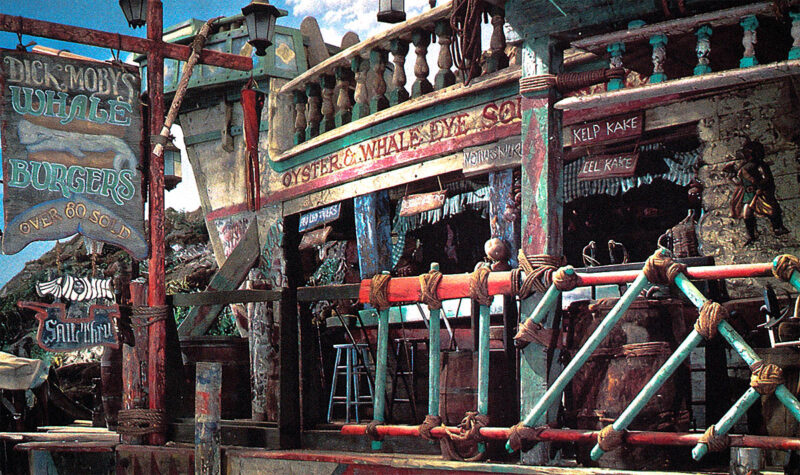
Whale burgers sold at a shop called “Dick Moby’s Whale,” a reference to the wound and thirst for revenge of Captain Ahab in Moby-Dick. It combines the two central symbols of Pirate Town: commerce and the maintenance of injury and how it becomes a marketable resource.
PRICES: ALL DAY=FREE, 1/2 DAY=75, 1 HOUR=100, 5 MIN =175
The only women visible in Pirate Town are prostitutes, selling their bodies. Indicating that a wounded woman chooses degrading paths, further showing how unhealed wounds can affect morality. The most important point is that a wounded population, kept trapped in its wounds, can be led into blind devotion to whoever claims to understand those wounds. With Hook’s promises of glory and fortune, this pirate population is ready to waste away in poverty, convinced that Hook has their best interests at heart. The town as a whole reflects the darker parts of Peter’s mind: his cynicism, pride, emotional distance, and the cold, ruthless thinking that turned him into a businessman. Pirate Town is what makes Neverland Hook’s territory: a corrupted and wounded world, reflection of Peter’s own mind and moral decay.
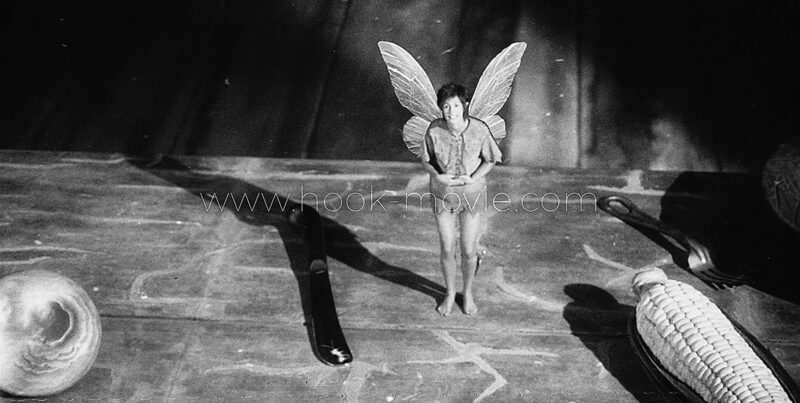
Shot from Peter’s point of view before Tinker Bell cuts his hand, as it was intended to appear in the film.
This scene also introduces the Lost Boys held prisoner by Captain Hook. They first turn up at the forge, in the background while Smee collects the hook from the blacksmith, serving as slaves to the pirates, handing over tools, holding what's needed. One of them seems to be under training, a pirate making him watch the work while explaining what he'll be expected to do.
At Good Form Pier, Peter witnesses the capture of a new Lost Boy taking shape in front of him. The pirates tear apart the photographs he was carrying, eating them outright, erasing the last traces of whatever life he had before hoisting him up into the cells. Peter watches, shocked, powerless to do anything about it. These characters barely appear in the version of the film released in 1991, yet they mattered to Maggie's arc, itself cut from the finished edit. More on that later.
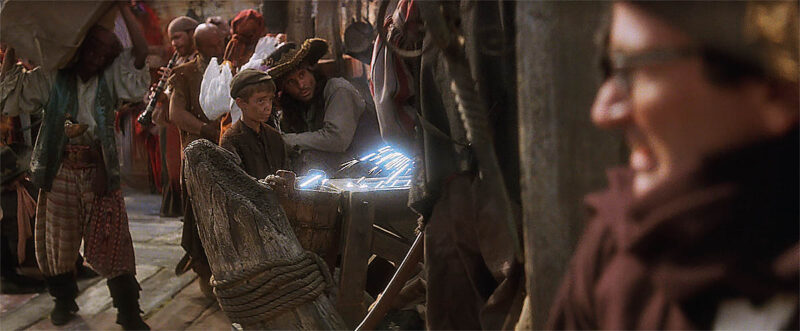
A Lost Boy prisoner being forced to learn from a pirate.
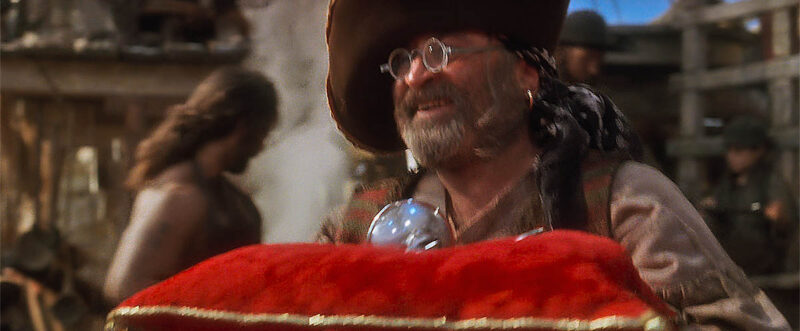
Two others visible behind the blacksmith pirates and Smee.
The audio track meant to accompany the deleted scene of Tinker Bell cutting Peter's hand finally surfaced in 2012, on the 2CD edition released by La-La Land Records (LLLCD 1211, Disc 2, Track 12, "Presenting The Hook (Film Version Extended)"), and again in a remastered version in 2023 (LLLCD 1632, Disc 1, Track 14, "Pirate Town And Presenting The Hook"), which for the first time included the song "Low Below." That song carries the entire thematic core of the pirates and Pirate Town (LLLCD 1632, Disc 3, Track 8, "Low Below - Pirate Sequence," and its demo, LLLCD 1632, Disc 3, Track 22, "Pirate Sequence").
Among all the unused songs, "Low Below" stands out as the most developed. Thanks to the work of Mike Matessino and La-La Land Records, it's finally possible to hear the song as it was originally prepared for filming. What it might have become in a fully edited version, complete with dialogue scenes and extended musical bridges that were never composed, is anyone's guess. Still, hearing a song that's long lived only in imagination is its own reward, especially since its lyrics survive in certain early scripts, unlike other songs from the production that go unmentioned entirely. It's also the only number choreographed almost down to the millimeter in the script itself.
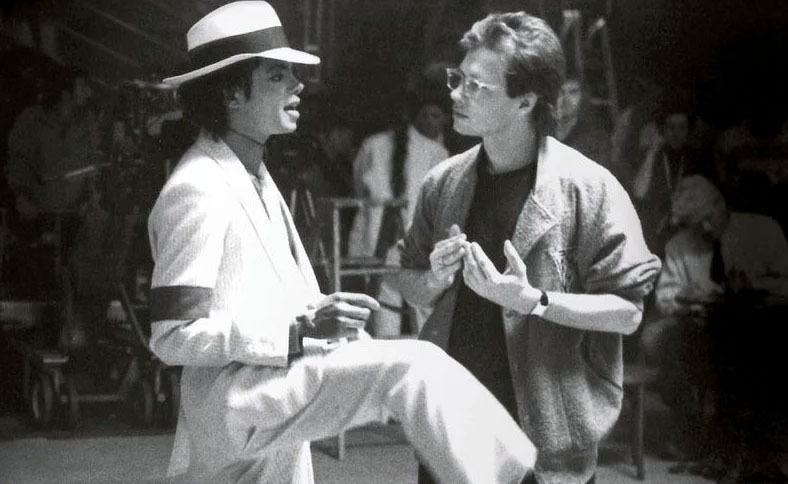
Michael Jackson and Vincent Paterson
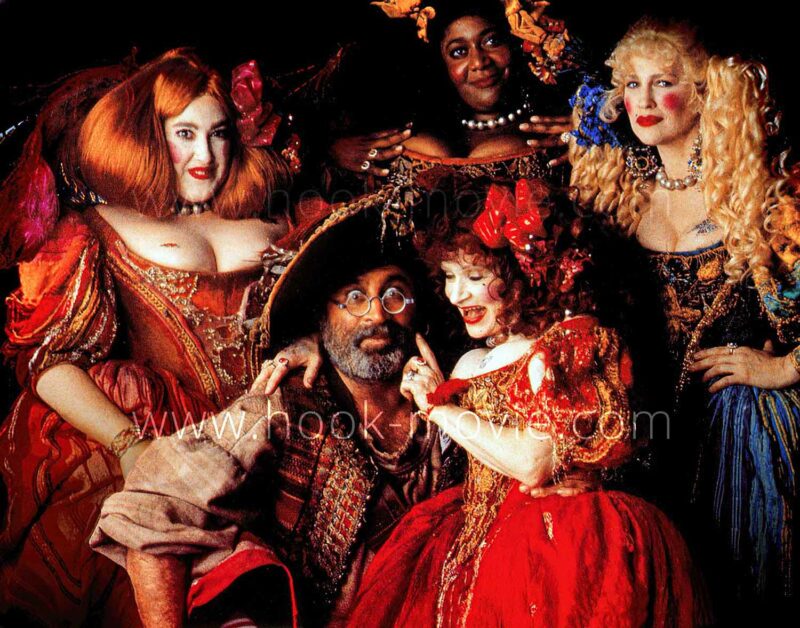
Smee and the prostitutes of Pirate Town
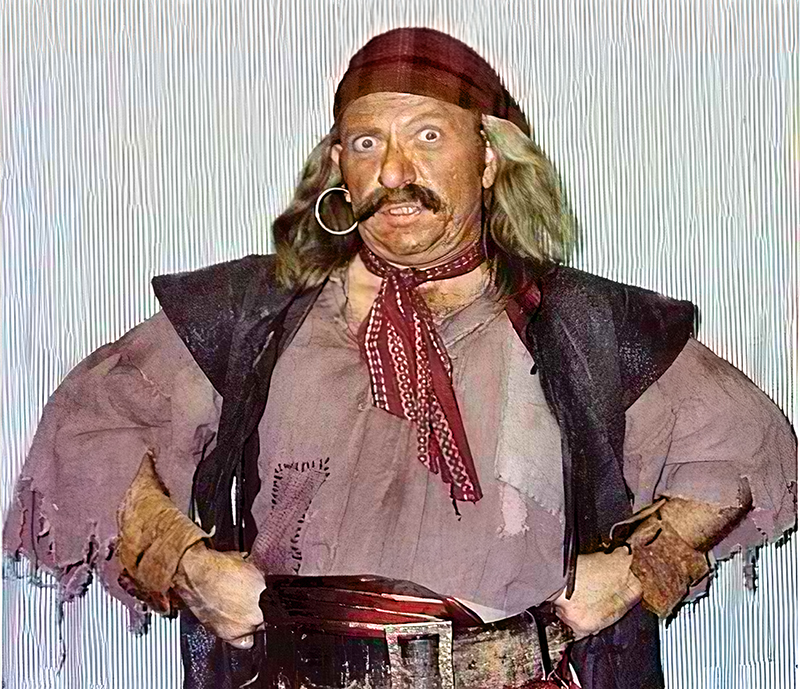
Lonnie Burr, one of the peg-legged pirates during the tavern sequence and one of the voices on the song recording.
Many involved in the production, or who saw the scene during development, describe it as one of the most thrilling and ambitious musical numbers attempted in Hollywood in years. By all accounts it could have become a legendary moment had it survived into the final cut. One particularly striking account comes from costume designer Anthony Powell, who saw parts of the sequence and offered this reflection to journalist Patrick Fahy:
Patrick Fahy: "There must be times when you regret that a costume doesn’t appear properly in the final cut of a film."
Anthony Powell: "It isn’t just that. When we were doing Hook (1991), there was a wonderful, self-contained, 20-minute fantasy musical sequence, brilliantly arranged by Madonna’s choreographer, which was actually the best bit of the film. There were lots of costumes made specially for it, with the whole Pirate Town set full of people; pirate beauticians and everything. It was very witty and had terrific music. It was all shot, but in the end, Steven [Spielberg] cut the whole sequence from the film. It isn’t even on the DVD as an extra."
SOURCE: bfi.org.uk
Bob Hoskins mentioned the removal of this scene during the film's promotion as one of his biggest frustrations and disappointments on Hook, given how deeply involved he'd been in the performance.
The Captain Hook
The scene builds as a gradual reveal, the knees, the display of jewels, the boots, then the hook, to signal that Hook isn't a simple man but a constructed icon. He is, literally, what he wears. He readies himself the way a celebrity readies a show. He can't exist outside all this staging, and yet he hates every bit of it. Hook is a character who despises his role while knowing he cannot exist without playing it. The scene never made the film, but it clearly shaped the teaser's finale. After the journey across the map and the flame that consumes it, we find Hook's magnifying glass, which he swaps for his Hook. That shot almost certainly came from this sequence.
The shot was replaced by a plain shot in the dark, the Hook clipping into its base in a burst of light and smoke.
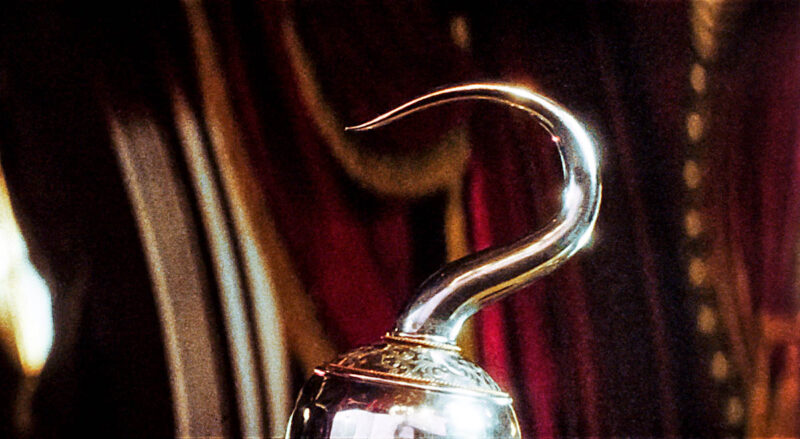
The hook as it appears in the teaser, within the cabin set.
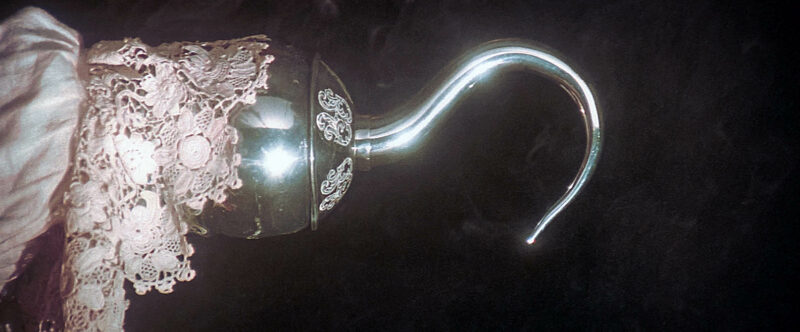
The hook in the final film, in complete darkness.
As in the play that opened the film, Hook reveals himself as the star of a show, greeted by his pirates' acclaim. Everything is theatrical, staged. He's described as a "matinée idol," betting everything on appearance and artifice to draw his audience's adulation. Just as Peter Banning is a prisoner of his work, Hook is a prisoner of his image. He's forced to play the part to preserve his lifestyle and his authority.
As I tried to explain in the Act 1 part regarding the school play, the hook reveals the artifice. Hook uses it against Peter at the end of the film, forcing him out of the fiction and out of his role. But it also reveals the artifice of the film itself. The hook exposes the film’s technique, the crew, and the studio lighting. Even in the two shots above, the teaser shot and the reveal of the hook fitted into its base in the film, the technicians, lights and reflectors are visible.
It would have been simple to place the lace over the base of the hook, and yet the choice was made to show the reflection in the hook.
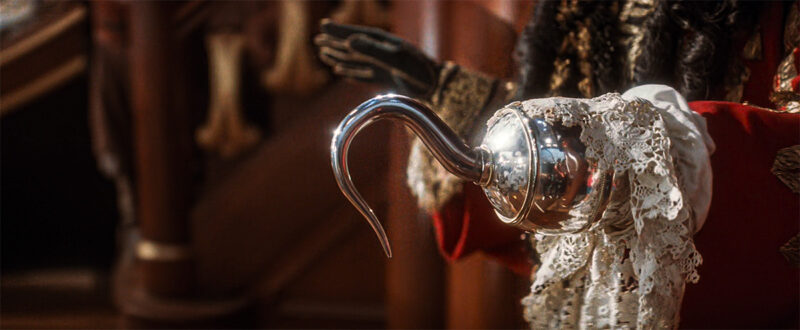
The crew reflected in the hook.
As I noted again and again across Act 1, and will keep insisting on, because everything hinges on understanding this: Hook is a projection of Peter's flaws. Where Hook is a narcissistic tyrant who holds his audience and his men in contempt, Peter is a cold businessman who holds his employees in contempt, as the deleted scene The Meeting shows. Peter's remark about Hook's finances confirms his initial blindness to the wondrous; he reduces a legendary pirate to a financial statistic. Like Peter Banning, Hook hates himself. For both, everything rests on the trinkets that define who they are, costume and accessory, a hook for one, cufflinks for the other. Two cynical men who exist only through the gaze of those they despise, employees for Banning, pirates for Hook. A mirror of Peter Banning's moral decay.
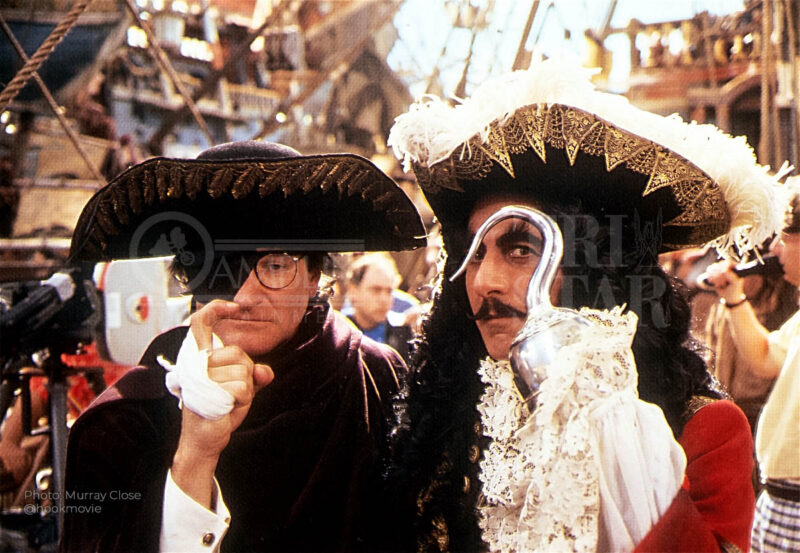
The crew reflected in the hook.
An important element surfaces through this deleted scene, an abandoned concept for the film: Smee was originally meant to carry a concertina on his belt, a small accordion typically associated with sailors.
The idea was to keep the instrument permanently at his waist, letting Smee punctuate Hook's speeches at any moment with short musical phrases. Hook isn't just a pirate here, he's a character who performs, and this musical layer would have amplified his words, reinforcing his authority almost like an internal soundtrack following him around. The approach turned each of Hook's appearances into a form of spectacle, dialogue, gesture, and music working together, without tipping into a full musical number, since this wasn't about songs but about background music shaping Hook's dialogue and mood in real time.
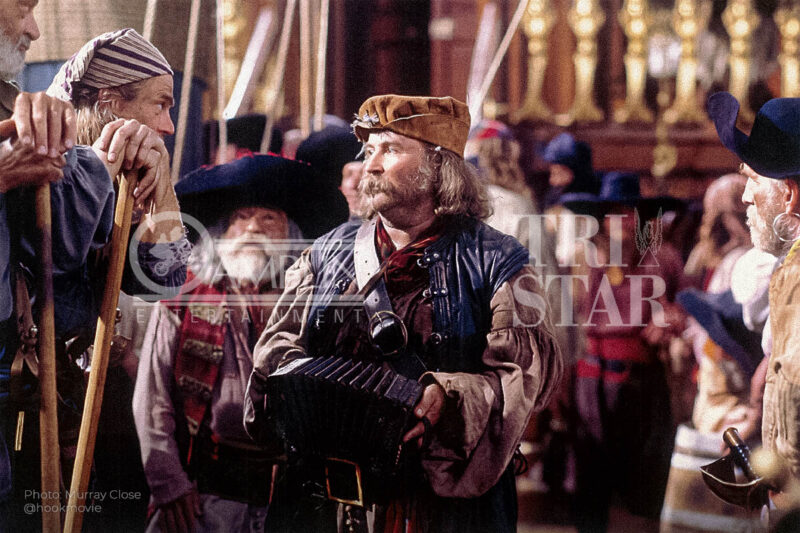
Tickles playing the concertina as the crowd cheers for Captain Hook.
For these scenes, John Williams composed and recorded a series of concertina cues before filming even began, meant for direct use on set. The scenes built around this concertina music mainly included Hook's first appearance, his deal with Tinker Bell, his brooding moments in his cabin, the lesson scene, "Take Me Out to the Ball Game" during the baseball game, parts of the final battle, and Smee's last scene with the mermaids.
Ultimately, the concept was dropped, though not entirely erased. Smee no longer carries the instrument in the finished film. Instead it turns up in the hands of Tickles, the pirate played by David Crosby, who's consistently seen holding it but never actually plays it, since none of the concertina music made it into any scene of the final cut. That music, recorded for scenes that never used it, finally surfaced in the 3CD Ultimate Soundtrack box set released by La-La Land Records in 2023.
This exposition scene for Captain Hook in the cabin runs unnecessarily long. What made it into the finished film works better, revealing Hook with far more impact.
The main reason I include it among the deleted scenes, even though it faded out of the script as the production went on, is the teaser. It clearly draws on this same idea of a step-by-step reveal, first the magnifying glass, then the hook clipping onto its base. That shot captures the atmosphere this scene was meant to build.
Captain Hook’s show
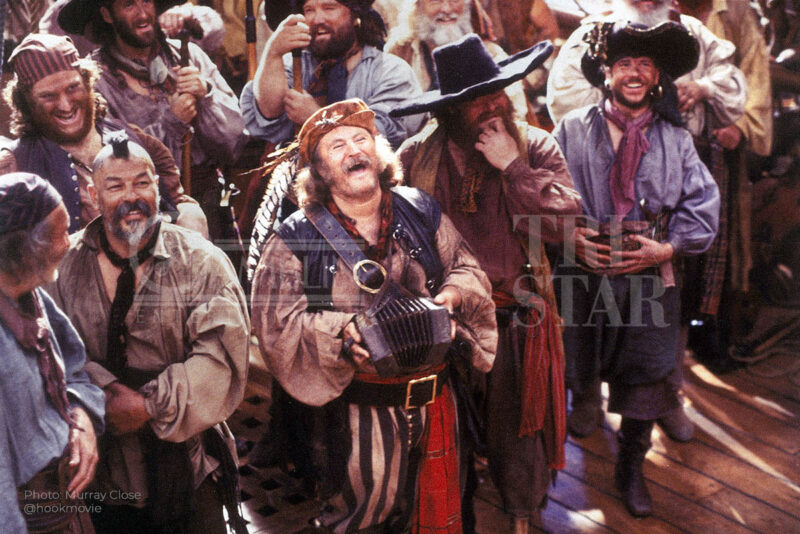
Tickles playing the concertina as the crowd cheers for Captain Hook.
To the cheers of his crew, punctuated by Tickles frantically working his concertina, Hook is welcomed with fanfare onto the deck of the Jolly Roger.
Even as we catch him confiding to Smee all the contempt his men inspire in him, he doesn't miss the chance to thank them for their ovation by heaping insults on them, which they take as so many compliments.
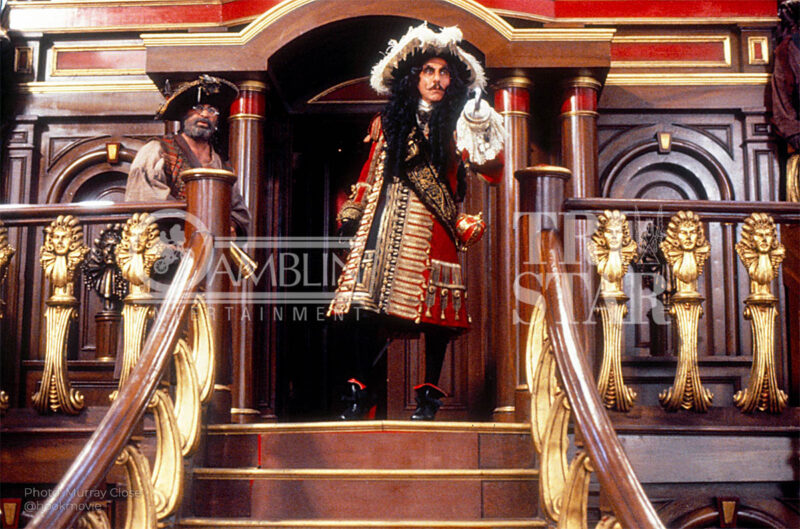
Tickles playing the concertina as the crowd cheers for Captain Hook.
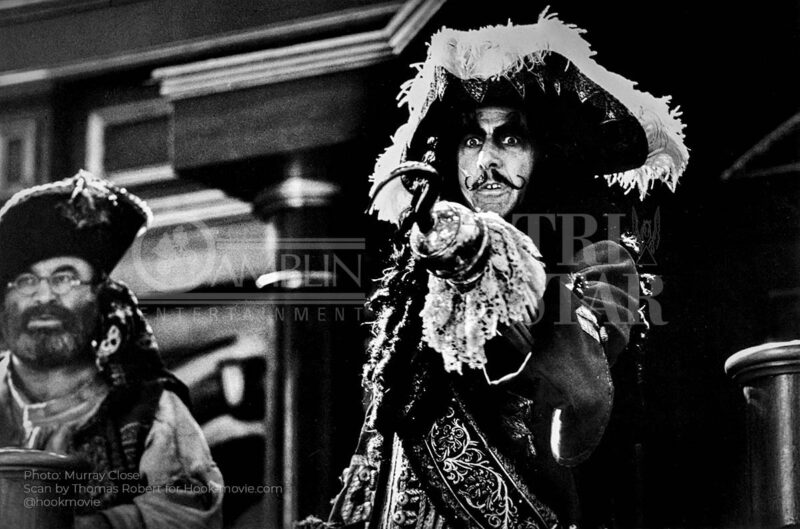
Tickles playing the concertina as the crowd cheers for Captain Hook.
Silence falls when Hook lays out his plan: he has baited his hook with Pan's children, who are sure to draw him in, and he'll finally be rid of the boy who cut off his hand and threw it to the crocodile. As he evokes that hand, his tone turns more savage and he works the crew into a chant, a kind of religious ritual, prompting the pirates to roar his name back at him after every line. Who killed the crocodile? Hook! Who silenced it for good? Hook! Who went round the world to England to snatch the children? Hook!
Silence returns when he accuses one of his men of treachery, charging him with having doubted him. A pirate then lets a pin slip, and its tiny ring seizes the whole crowd's attention, though Hook already has the traitor's identity in mind. He begins his descent to the deck, stopped short by the missing red carpet, since a superstar can hardly take the stairs without one.
Tickles playing the concertina as the crowd cheers for Captain Hook.
He carves a path through the pirates to Gutless and accuses him of having bet against him. The wretch finally confesses, and Hook condemns him to the boo box, where he'll be shut in with scorpions until death takes him.
Hook then parades among his men and picks his act back up, evoking Pirate Town, that city built on the carcasses of ships, a trophy-city, the paradise he offers them. He launches into a macabre tirade announcing the celebration to come: the slaughter of youth, the strangling of innocence, the imminent arrival of Pan, whose bones he'll grind to dust. He then has an effigy of Peter Pan lowered and runs it through, proclaiming his glorious war, which he vows to win. The cannons thunder.
At last he orders the children brought up. A winch hoists a net out of the hold: Jack and Maggie, in their pajamas, terrified, struggle inside it. The net comes to a halt at Hook's eye level, and he greets them as the cannon smoke hazes the air.
Hook Challenges Peter
To be continued.